Outdoors
Yarrow
Achillea millefolium
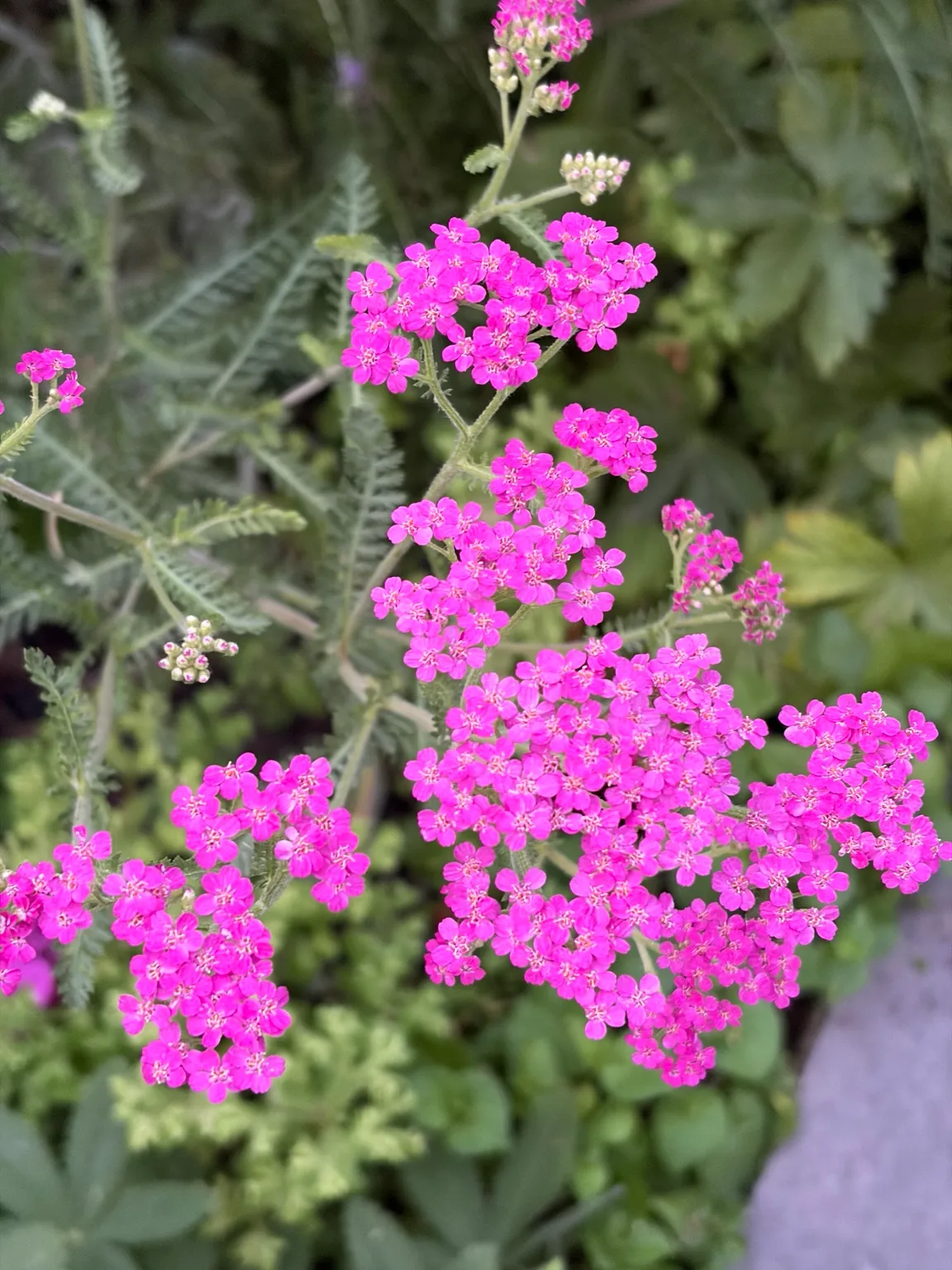
Flat plates of tiny magenta-pink flowers over feathery grey-green foliage. Thrives on neglect and resents kindness.
- In flower now
- Perennial
- Drought-tolerant
- Type
- Perennial
- Light
- Full sun
- Water
- Drought-tolerant
- Hardiness
- H7
- Where
- Border
- Flowers
- June–September
- Colour
- pink, magenta
Flowering year
Flowers June–September. It is currently August, so this plant is in flower.
Cutting back after the first main flush usually brings a lighter second one.
Outlined month is August, today.
Position and soil
- Sun
- Full sun
- Aspect
- South-facing
- North-facing
- West-facing
- East-facing
- Exposure
- Exposed
- Sheltered
- Soil
- Chalk
- Clay
- Loam
- Sand
- Moisture
- Moist but well-drained
- Well-drained
- Soil pH
- Acid
- Alkaline
- Neutral
- Ultimate size
- 0.5-1 metres tall × 0.1-0.5 metres wide · 2-5 years to get there
- Habit
- Spreading branched
- Foliage
- Deciduous
- Family
- Asteraceae
Sourced from the RHS.
Care
- Watering
- Genuinely drought-tolerant once it has settled in. Reach for the hose only in a prolonged drought — it is one of the last things in the border to need help.
- Feeding
- Don't. Rich soil and feeding produce lush growth on weak stems, and the whole clump lies down after rain.
- Pruning
- Deadhead individual heads to keep it flowering, then cut the clump back hard once the first main flush is finished.
Winter — Cut back
Either cut the stems down after the last flowers or leave the flat seedheads standing — they hold frost well and the birds pick them over — then cut back in early spring. It needs no protection; the only thing that harms it here is winter wet on heavy soil.
Dense flat-topped plates of tiny flowers, this one a hot magenta-pink, held above finely divided foliage that looks more like a fern than a border plant. The species name means thousand-leaved, which is about right. It is a British native, so it is entirely at home in a dry sunny spot and needs no coaxing.
What it actually wants
To be ignored. This is the one plant in the border where generosity backfires: water it well, feed it or plant it in rich ground and the stems grow soft and tall, then the first summer downpour flattens the entire clump outwards from the middle. Yarrow grown hard, in poor free-draining soil and full sun, stands up on its own. If yours is flopping, the answer is less of everything, not a ring of canes.
Two things worth knowing. It spreads by underground runners and will quietly walk sideways through its neighbours, so lift and divide it every few years and be firm about the edges. And many named pink cultivars fade as the flowers age — this one will drift towards a dusty cream before the heads go over, which is the cultivar behaving normally rather than dying.
The flat heads are landing pads. Hoverflies, parasitic wasps and small beetles work them constantly, which makes it more useful than it looks.
Winter
Nothing to protect. Leave the seedheads for structure if you like them, cut them off if you don’t, and clear them before growth starts in spring.