Outdoors
Wild rose
Rosa canina (dog rose type)
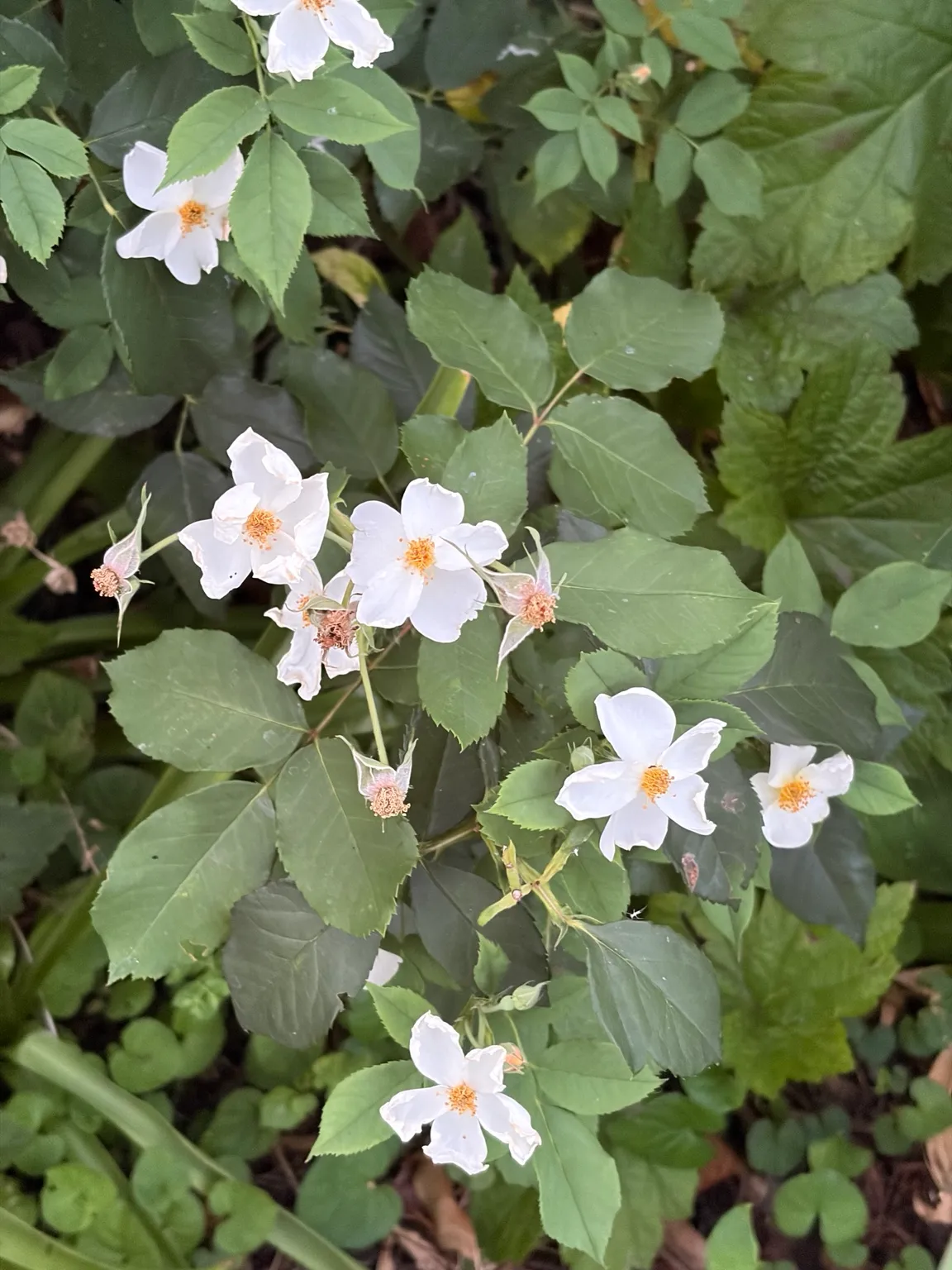
A thorny, arching species rose carrying clusters of single white flowers with yellow stamens, followed by hips. Asks for nothing.
- Rose
- Drought-tolerant
- Type
- Rose
- Light
- Full sun
- Water
- Drought-tolerant
- Hardiness
- H7
- Where
- Border
- Flowers
- May–July
- Colour
- white, cream
Flowering year
Flowers May–July. It is currently August, so this plant is not in flower.
One flush only. No repeat, and no point deadheading if you want hips.
Outlined month is August, today.
Position and soil
- Sun
- Full sun
- Partial shade
- Aspect
- South-facing
- North-facing
- East-facing
- West-facing
- Exposure
- Exposed
- Sheltered
- Soil
- Chalk
- Clay
- Loam
- Sand
- Moisture
- Moist but well-drained
- Well-drained
- Soil pH
- Acid
- Alkaline
- Neutral
- Ultimate size
- 2.5-4 metres tall × 1.5-2.5 metres wide · 5-10 years to get there
- Habit
- Spreading branched
- Foliage
- Deciduous
- Family
- Rosaceae
Sourced from the RHS.
Care
- Watering
- Once established it looks after itself. Water only in a genuinely extended drought, and even then it will probably beat you to it.
- Feeding
- A mulch in spring is plenty. Heavy feeding just produces soft growth and more thorns to fight through.
- Pruning
- Very little. Take out dead or awkward stems after flowering, and leave the hips on for autumn and for the birds.
Winter — Nothing to do
Nothing to do. It is hardy to the point of being difficult to kill, and the hips are the best thing about it in December.
Pets and children
The hips are ornamental rather than edible as they come — the seed hairs inside are a well-known irritant.
Five white petals, a boss of yellow stamens, and a scatter of flowers in loose clusters along arching stems that will take your forearm off if you reach through them without thinking. It flowers hard for a few weeks in early summer and then stops, which is the deal with species roses.
What it actually wants
Almost nothing. It is a hedgerow plant doing hedgerow things, and the main way to get it wrong is to treat it like a modern bush rose.
The important bit is the pruning. It flowers on wood made in previous seasons, so cutting it back hard in late winter the way you would a hybrid tea removes next summer’s flowers and, with them, the hips. If it needs reducing, do it straight after flowering and take out whole stems at the base rather than shortening everything to a uniform stubble.
Leave the spent flowers on. Deadheading a species rose is actively counterproductive — the hips are the second act, they colour up orange-red through autumn, and the birds work through them well into winter.
The name has nothing to do with the plant’s temperament, incidentally: the root was once believed to cure the bite of a rabid dog.
Winter
Nothing. Hardy anywhere in the UK, unbothered by cold or wind, and better looking with hips on it than most things in the border are in flower.