Indoors
White princess philodendron
Philodendron 'White Princess'
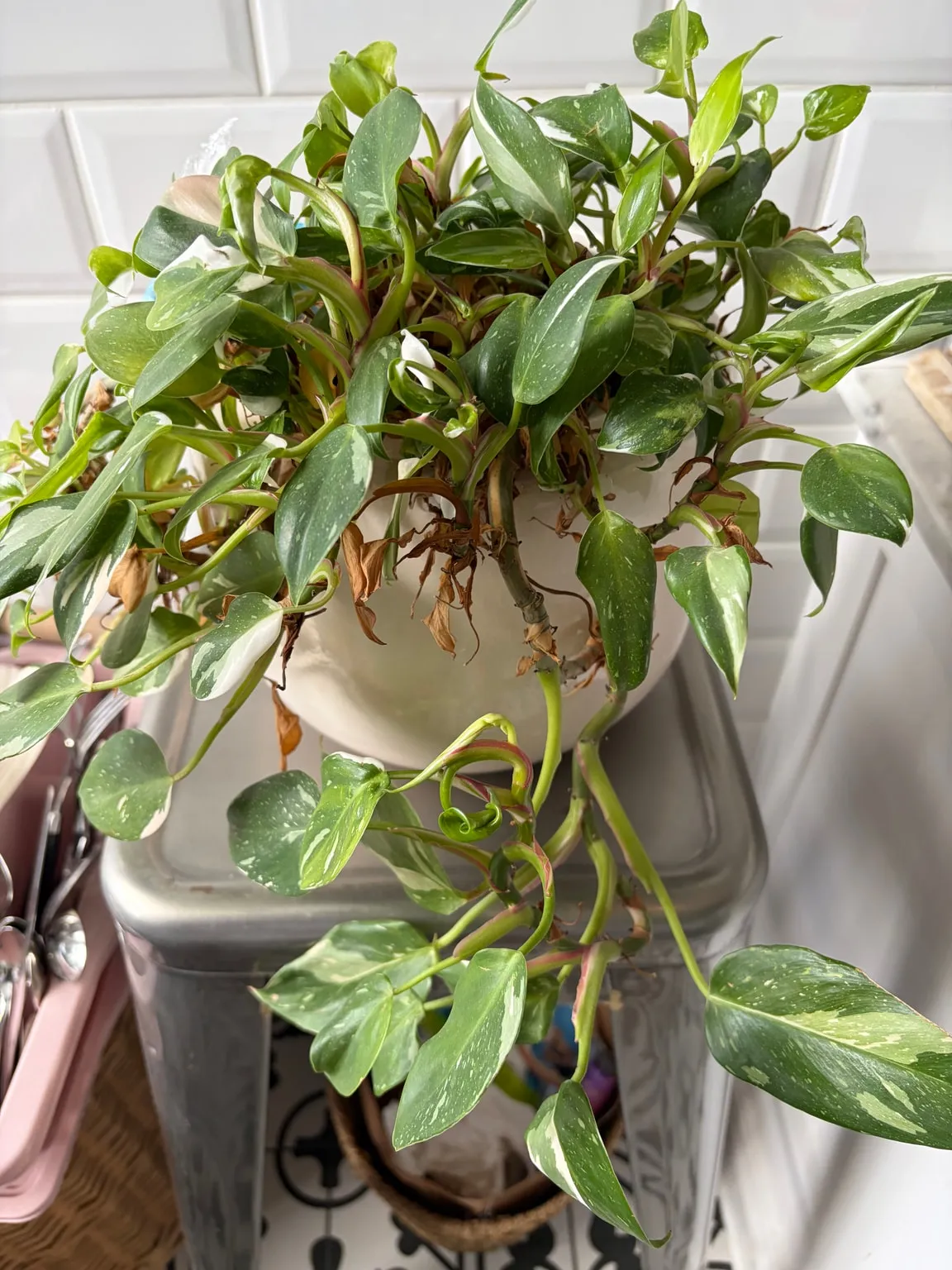
Green leaves splashed and speckled with pure white on pink-flushed stems. A climber currently being grown as a trailer, which is most of what is wrong with it.
- Houseplant
- Grown for foliage
- Average
- Type
- Houseplant
- Light
- Bright, indirect light
- Water
- Average
- Where
- Kitchen, bright spot
Care
- Watering
- Water when the top few centimetres are dry and let it drain properly. The white sections do no photosynthesis, so the whole plant uses less water than its size suggests and a heavily variegated one left wet will rot at the base long before it dries out.
- Feeding
- Balanced liquid houseplant feed at half strength monthly through spring and summer. It grows slowly and a full-strength feed does more harm than good.
- Pruning
- Prune to keep the balance rather than to remove green. Cut a stem back to a node whose leaf has a decent share of both colours — a shoot running to almost entirely white cannot feed itself and will die back on its own, taking the stem with it.
Winter — Water much less
Water perhaps every two or three weeks and stop feeding. It dislikes anything below about 15°C, so keep it off cold windowsills and away from doors to outside. Growth stops almost completely and any new leaf it does make over winter will come out small and mostly green — leave it be until the light returns.
Pets and children
All parts contain calcium oxalate crystals, so a chewed leaf will burn a cat, dog or child's mouth. Worth siting accordingly given where it currently sits.
Pointed green leaves flecked, speckled and sometimes halved with pure white, on stems flushed pink and red. It is a striking plant and a demanding one, and this particular specimen is not currently getting what it needs — the brown collapsed leaves through the middle and the long stems sprawling over the pot edge are both symptoms of the same thing.
What it actually wants
Something to climb. This is an upright climber sold in a pot that encourages it to do the opposite, and it does not trail gracefully — unsupported, the stems stretch, the internodes get longer, and each new leaf comes out smaller than the one before it. Push a moss pole in and tie the stems to it and the leaf size increases within a season. That single change fixes more of what is wrong here than any adjustment to watering.
The white is the other half of it. Those sections contain no chlorophyll, which makes them structurally weaker as well as unproductive: they brown at the edges, they scorch in direct sun that green tissue would shrug off, and a leaf that comes out almost entirely white will die within a few months having contributed nothing. This is the opposite of the usual variegation advice — with most plants you cut the green out to preserve the pattern, and with this one you cut back to green to keep the plant alive. Aim for leaves that are roughly half and half and it will sustain itself.
Bright indirect light is the narrow target. Too little and the new growth comes through solid green; too much and the white burns. Near a window but not in the sun is about right, which is a fussier requirement than anything else here.
Winter
Slow to the point of stopping. Water it much less, feed it not at all, and keep it above 15°C and away from draughts. Resist the urge to fix a sad-looking plant in January — repotting, feeding or moving it in low light is how a struggling one becomes a dead one. Do the moss pole and the pruning in spring.