Outdoors
Japanese snowball viburnum
Viburnum plicatum
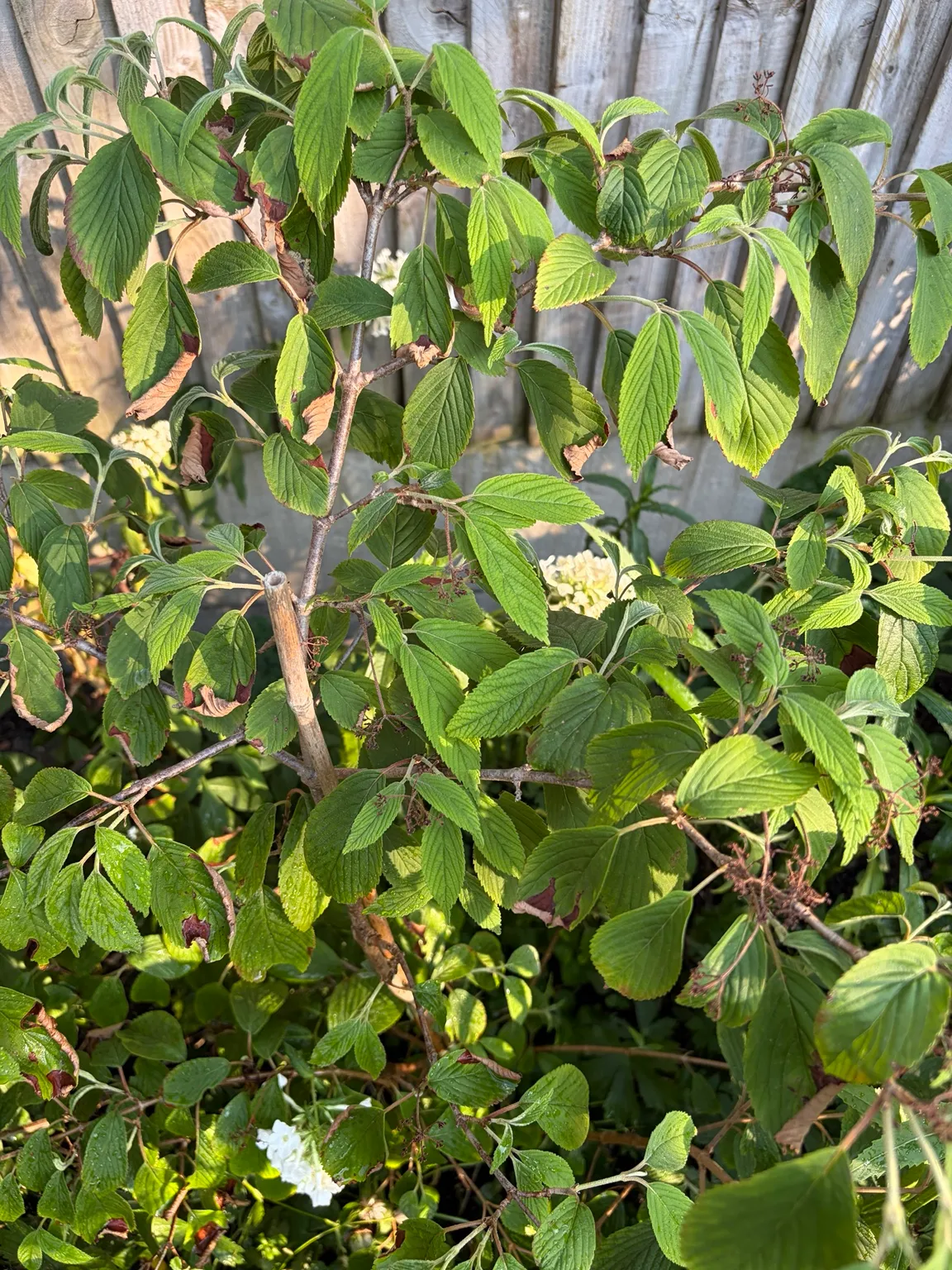
A tiered, layered shrub carrying flat white flower heads along the top of horizontal branches in late spring. Browns at the leaf edges when it gets dry.
- Shrub
- Average
- Type
- Shrub
- Light
- Partial shade
- Water
- Average
- Hardiness
- H6
- Where
- Border
- Flowers
- April–June
- Colour
- white
Flowering year
Flowers April–June. It is currently August, so this plant is not in flower.
Some forms follow the flowers with red-then-black berries and decent purple autumn colour.
Outlined month is August, today.
Position and soil
- Sun
- Full sun
- Partial shade
- Aspect
- East-facing
- South-facing
- West-facing
- Exposure
- Exposed
- Sheltered
- Soil
- Chalk
- Clay
- Loam
- Sand
- Moisture
- Moist but well-drained
- Soil pH
- Acid
- Alkaline
- Neutral
- Ultimate size
- 2.5-4 metres tall × 2.5-4 metres wide · 5-10 years to get there
- Habit
- Spreading branched
- Foliage
- Deciduous
- Family
- Viburnaceae
Sourced from the RHS.
Care
- Watering
- Keep it evenly moist while it is establishing and through any long dry spell. It shows stress at the leaf margins before anywhere else — drought, baking sun and drying wind all produce the same crisp brown edges.
- Feeding
- A spring mulch of compost or leaf mould is normally all it asks for. Only reach for a balanced slow-release shrub feed if growth is genuinely weak.
- Pruning
- Light work only, straight after flowering — take out dead, crossing and awkward stems and nothing else. Do not hard-prune it.
Winter — Nothing to do
Fully hardy and entirely uninterested in the cold. Nothing needs doing over winter — the mulch and the light prune both belong to spring and early summer.
Strongly veined, pleated leaves held in opposite pairs along branches that grow outwards rather than upwards, so the whole shrub builds itself in horizontal layers. In late spring the flat white heads sit on the upper surface of each tier, which is the effect the plant is grown for.
What it actually wants
Moist but not sodden soil, and shelter. The pleated leaves are thin and lose water quickly, so wind and hot afternoon sun both scorch the margins — the brown crisping round the edges is not disease, it is the plant telling you it ran out of water at some point. Once a leaf has browned it stays browned for the season.
The tiered branching is the reason to keep the secateurs mostly in the pocket. Those horizontal layers take years to build and a shrub cut back hard responds with a thicket of vertical whippy shoots that destroy the structure and take a long time to settle down again. Prune lightly, and only just after flowering — next year’s flower buds form on this year’s growth through summer, so cutting in autumn or winter removes the display before it happens.
Winter
Nothing at all. It is hardier than anything else it shares this border with, and the deciduous branch framework is worth looking at bare anyway. Save the mulch for spring and the pruning for the week after it finishes flowering.