Outdoors
Shrubby salvia
Salvia 'Hot Lips'
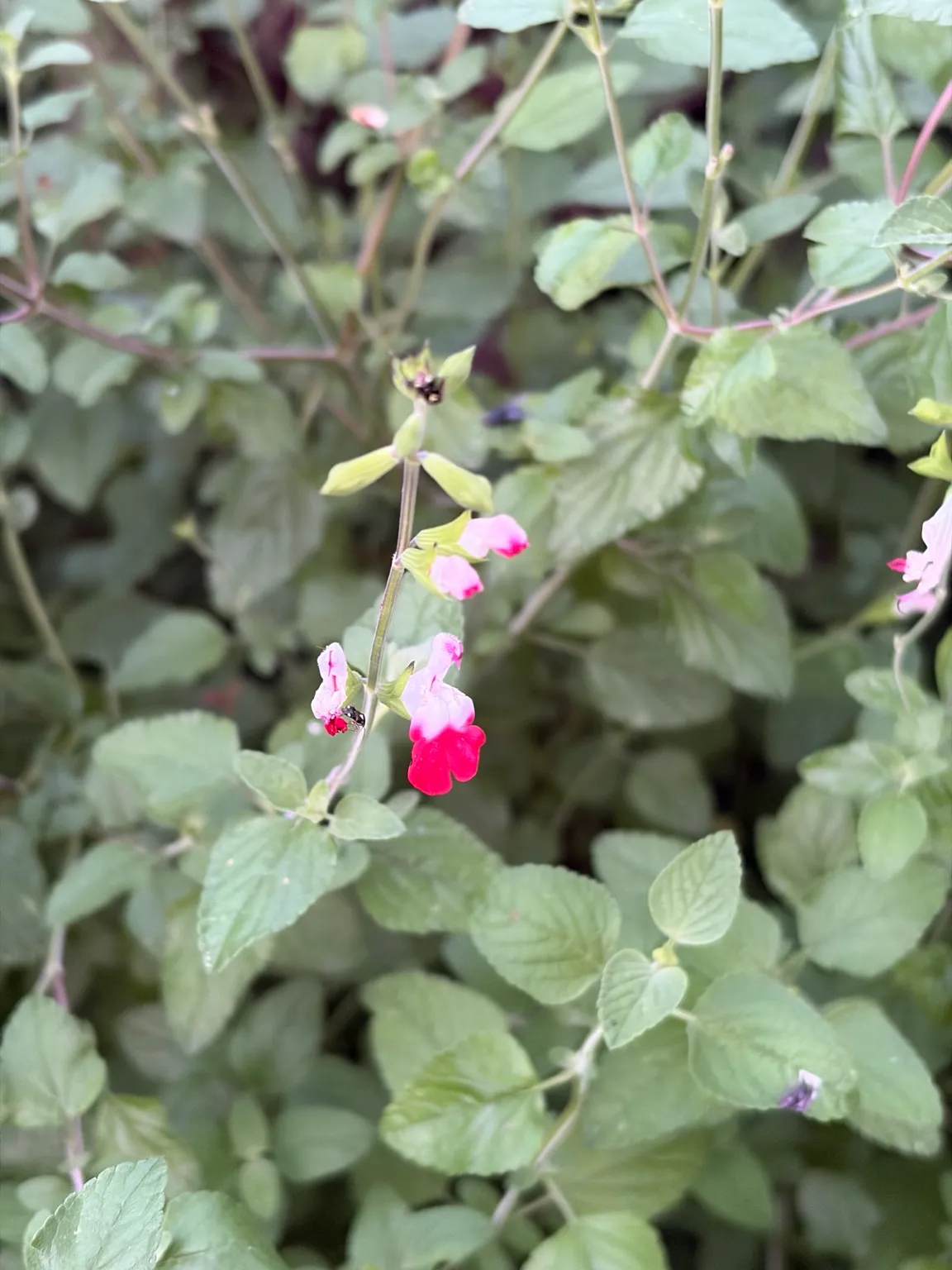
A twiggy, aromatic sub-shrub that flowers from June until the frosts, in red, white, or both at once depending on the weather.
- In flower now
- Shrub
- Average
- Type
- Shrub
- Light
- Full sun
- Water
- Average
- Hardiness
- H5
- Where
- Border
- Flowers
- June–October
- Colour
- red, pink, white
Flowering year
Flowers June–October. It is currently August, so this plant is in flower.
Keeps going until the first proper frost stops it.
Outlined month is August, today.
Position and soil
- Sun
- Full sun
- Aspect
- South-facing
- West-facing
- Exposure
- Sheltered
- Soil
- Chalk
- Loam
- Sand
- Moisture
- Moist but well-drained
- Well-drained
- Soil pH
- Acid
- Alkaline
- Neutral
- Ultimate size
- 0.5-1 metres tall × 0.5-1 metres wide · 2-5 years to get there
- Habit
- Bushy
- Foliage
- Evergreen
- Family
- Lamiaceae
Sourced from the RHS.
Care
- Watering
- Water regularly through its first summer while it roots in. After that, only in a dry spell. Sharp drainage matters more to it than watering ever will.
- Feeding
- A compost mulch in spring is enough. Rich feeding gives soft, floppy growth that rots in winter.
- Pruning
- Trim off spent spikes through the season to keep the flowers coming. Leave the main framework alone until spring, then cut back to the lowest visible new shoots.
Winter — Protect from winter wet
Cold rarely kills it here; sitting wet does. Improve drainage or add grit around the crown, keep autumn mulch off the base, and leave the old top growth on as a rain shield until spring. Take a few cuttings in late summer as insurance — they root easily and mean a dead plant is an inconvenience rather than a loss.
Small, blackcurrant-scented leaves on thin woody stems, and a steady supply of little two-lipped flowers from midsummer until something finally freezes it. Rub a leaf between your fingers and the smell is unmistakably sage-adjacent.
What it actually wants
Sun and drainage, in that order. It is a Mexican plant and it behaves like one: happy in poor, gritty, free-draining soil, sulky in anything heavy and damp. Keep trimming the finished spikes and it will keep producing new ones for months.
The colour thing confuses people. The same plant can carry solid red flowers, solid white ones, and the red-and-white bicolour it is named for, all at the same time, and gardeners regularly assume it has reverted or been mislabelled. It hasn’t. The pigment response is temperature-driven — heat pushes it towards solid red, cooler conditions towards white or the bicoloured form — so the display shifts through the season and differs from one summer to the next. There is nothing to fix.
Winter
This is the one to think about. It is only borderline hardy, but far more of them die from winter wet sitting around the crown than from cold. Do not tidy it back in autumn, however untidy it looks: the old growth keeps the worst of the rain off. Cut back in spring once new shoots appear low down, and if in doubt, root a few cuttings in late summer and keep them somewhere frost-free.