Outdoors
Rose campion
Silene coronaria
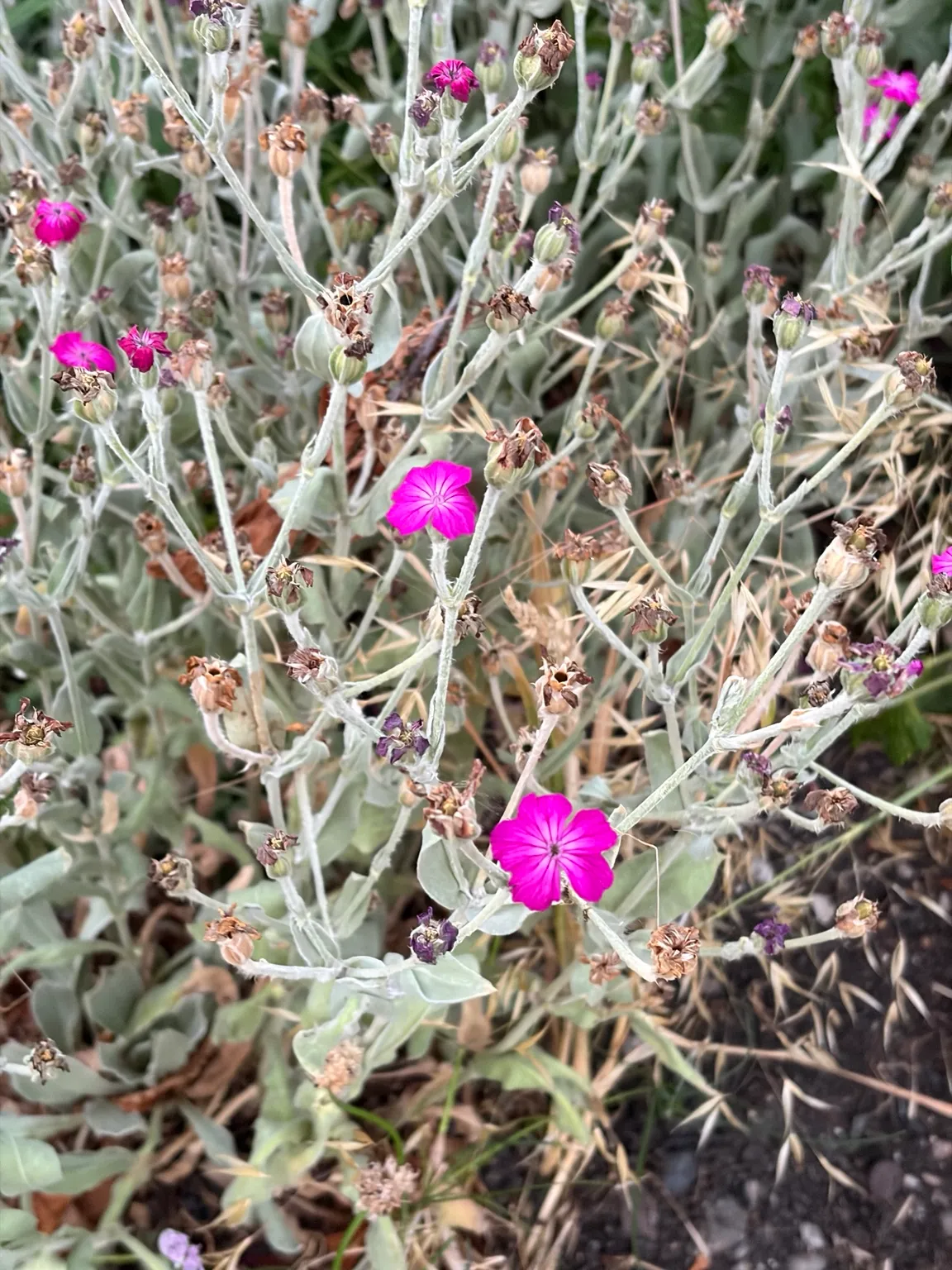
Shocking magenta flowers held on branching stems above silver-felted foliage. Short-lived, entirely undemanding, and quietly in charge of where it grows next.
- In flower now
- Perennial
- Drought-tolerant
- Type
- Perennial
- Light
- Full sun
- Water
- Drought-tolerant
- Hardiness
- H7
- Where
- Border
- Flowers
- June–August
- Colour
- magenta, pink
Flowering year
Flowers June–August. It is currently August, so this plant is in flower.
Often carries a few flowers into September, with seed capsules ripening behind them.
Outlined month is August, today.
Position and soil
- Sun
- Full sun
- Partial shade
- Aspect
- West-facing
- South-facing
- East-facing
- Exposure
- Exposed
- Sheltered
- Soil
- Loam
- Sand
- Moisture
- Well-drained
- Soil pH
- Acid
- Alkaline
- Neutral
- Ultimate size
- 0.5-1 metres tall × 0.1-0.5 metres wide · 1-2 years to get there
- Habit
- Clump forming
- Foliage
- Semi evergreen
- Family
- Caryophyllaceae
Sourced from the RHS.
Care
- Watering
- Genuinely drought-tolerant once it has its roots down. It far prefers to be too dry than too wet, so the watering can is mostly a way of making things worse.
- Feeding
- None needed. It does better in poor, free-draining soil in full sun than in anything you have improved for it.
- Pruning
- Cut spent stems off if you would rather not have seedlings everywhere. If you would, leave them and let it get on with it.
Winter — Nothing to do
Nothing to do, and specifically no thick mulch over the crown — the silver rosettes sit out the winter and rot if kept damp. Hardy well beyond anything the UK produces.
Flat, five-petalled flowers in a magenta so saturated it looks slightly wrong next to anything pastel, scattered on wiry grey stems above rosettes of soft silver-felted leaves. The foliage alone would earn it a place; the colour is divisive and worth it.
What it actually wants
Poor soil, full sun, sharp drainage and no help. It is the plant that thrives in the gravel at the edge of the border while the things you have fussed over sulk in the improved ground behind it.
The fact worth knowing is that it is not really a perennial. Most plants are biennial or last two or three years at best, so any given clump is on borrowed time — and it makes absolutely no difference, because it self-seeds with total reliability. Seedlings appear as unmistakable little silver rosettes, easy to spot and easy to move while small, and you end up with more of it than you started with. The practical consequence is the opposite of what it sounds like: do not deadhead everything. Cutting off all the spent stems for the sake of tidiness is how people lose the plant entirely and then wonder why.
Winter
Nothing at all. It is hardy far beyond anything a British winter can offer. The one thing to avoid is mulching over the crowns, which keeps the silver rosettes wet and rots them — the opposite of helpful.