Outdoors
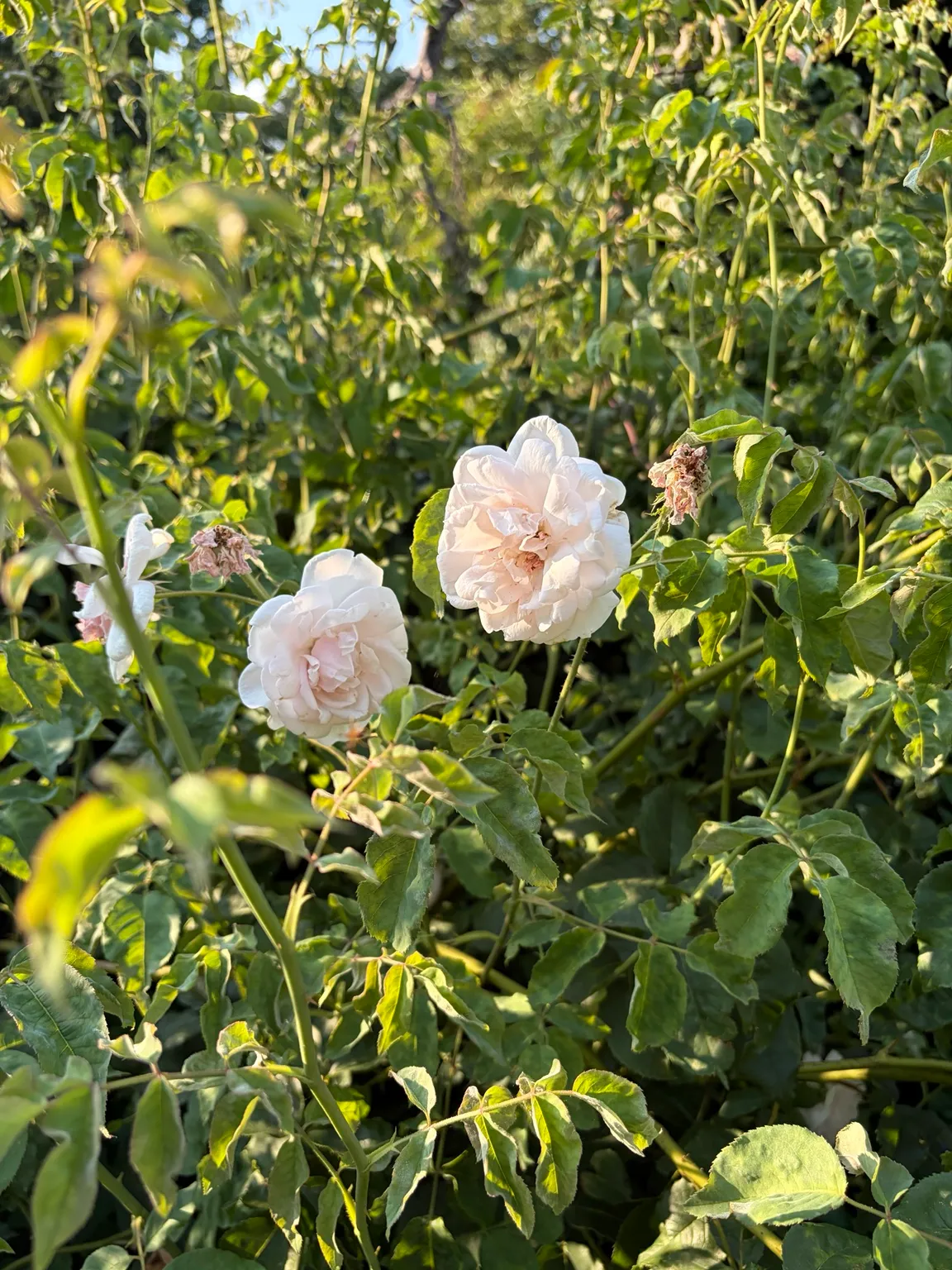
Pale pink shrub rose
Rosa
Quartered cream flowers flushed the faintest pink, repeating through the summer. Which rose it actually is remains an open question.
- In flower now
- Rose
- Average
- Type
- Rose
- Light
- Full sun
- Water
- Average
- Hardiness
- H6
- Where
- Border
- Flowers
- June–October
- Colour
- cream, white, pink
Flowering year
Flowers June–October. It is currently August, so this plant is in flower.
Repeats in flushes if it is a modern shrub — a once-flowering old variety would stop in July, so the second flush is the useful clue.
Outlined month is August, today.
Position and soil
- Sun
- Full sun
- Partial shade
- Aspect
- West-facing
- South-facing
- East-facing
- Exposure
- Exposed
- Sheltered
- Soil
- Clay
- Loam
- Sand
- Moisture
- Moist but well-drained
- Well-drained
- Soil pH
- Acid
- Alkaline
- Neutral
- Ultimate size
- 1-1.5 metres tall × 1-1.5 metres wide · 2-5 years to get there
- Habit
- Bushy
- Foliage
- Deciduous
- Family
- Rosaceae
Sourced from the RHS. Figures are for a representative cream-and-blush repeat-flowering shrub rose, Rosa Desdemona; our cultivar is unidentified.
Care
- Watering
- Deep soaks at the base, spaced out — a proper drenching twice a week in a dry spell beats a daily sprinkle, which only wets the top few centimetres and keeps the roots shallow. Most important while the buds are swelling.
- Feeding
- Compost or well-rotted manure spread round the base in spring, plus a rose feed. Repeat the feed after the first main flush finishes to power the next one.
- Pruning
- Prune in late winter or early spring. How hard depends on whether it is being grown as a freestanding shrub or trained flat against something, which is still undecided.
Winter — Mulch
Nothing to protect — it is fully hardy. A barrow of compost or manure spread round the base over winter is worth doing, more for the soil than the rose. Save the actual pruning for late winter.
Loose, many-petalled flowers in cream with a blush of pink towards the centre, opening flat and slightly quartered, fading almost to white in strong sun. The plant is big and lax, with long stems that arch over rather than standing up.
Which rose this is has not been established. The flower shape says old rose or an English-style modern shrub bred to look like one; the fact that it keeps producing buds well past July says modern. Anything more specific would be a guess, and the honest position is that we know what it does but not what it is called.
What it actually wants
The behaviour that matters is repeat flowering, and repeat flowering is a transaction. A rose sets hips because it is trying to make seed; once it has started, it stops making flowers. Deadhead promptly and it never gets the signal, so it keeps trying. Take the spent bloom off back to the first outward-facing leaf with five leaflets rather than snapping the head off at the neck — the bud that pushes out from there is the one that flowers next.
Stop deadheading in September if you want hips over winter. Otherwise carry on until it stops of its own accord.
Winter
Little to do. Hardy, established, and not remotely bothered by a British winter. Mulch it if there is spare compost going, prune in late winter, and otherwise leave it.