Outdoors
Lacecap hydrangea
Hydrangea macrophylla
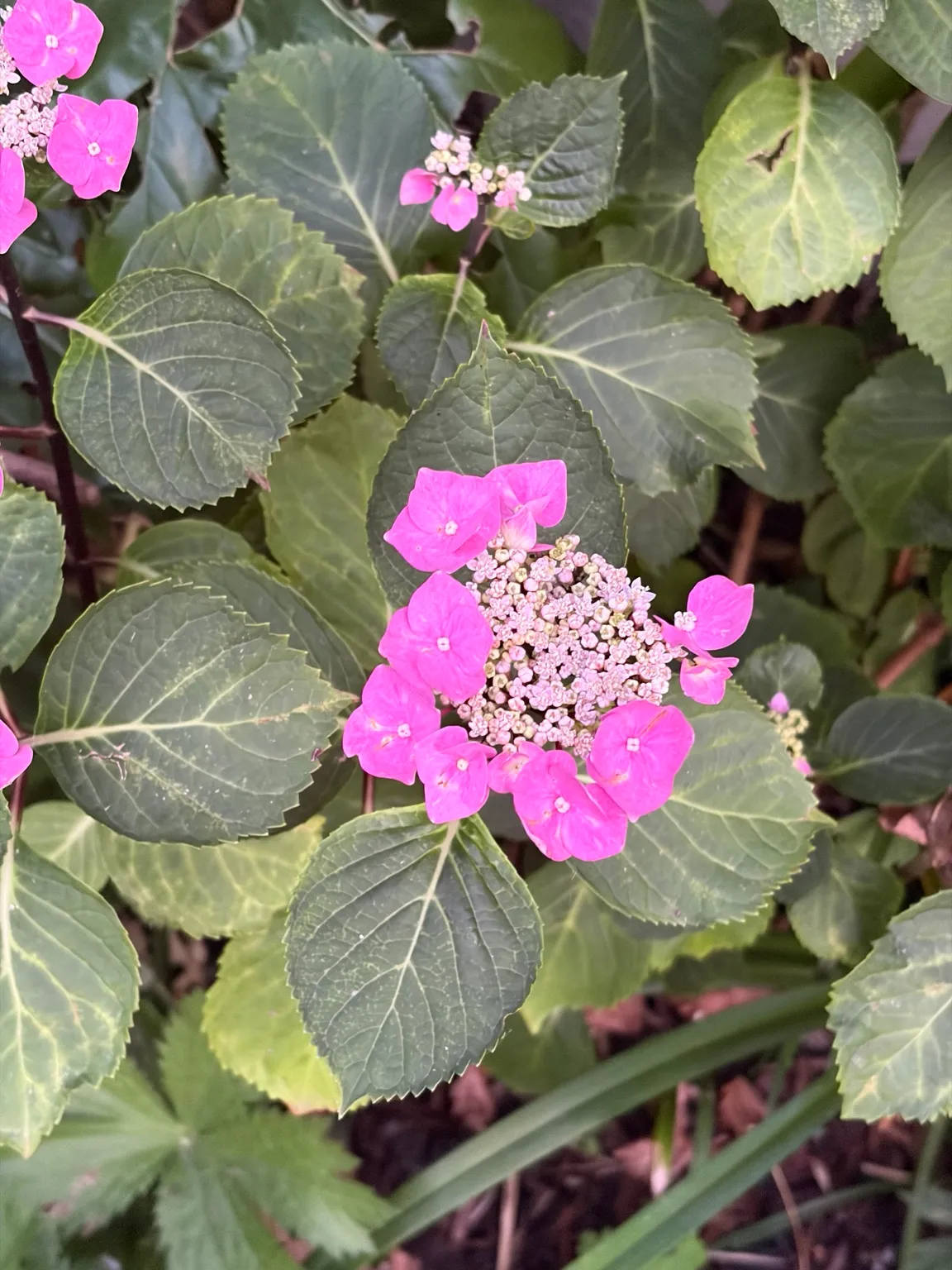
A flat-headed hydrangea with a ring of showy sterile florets around a centre of tiny fertile ones. The first thing to wilt in a heatwave.
- In flower now
- Shrub
- Thirsty
- Type
- Shrub
- Light
- Partial shade
- Water
- Thirsty
- Hardiness
- H5
- Where
- Border
- Flowers
- July–September
- Colour
- blue, lilac, white
Flowering year
Flowers July–September. It is currently August, so this plant is in flower.
Often holds faded heads into October — leave them on over winter.
Outlined month is August, today.
Position and soil
- Sun
- Full sun
- Partial shade
- Aspect
- South-facing
- West-facing
- North-facing
- East-facing
- Exposure
- Sheltered
- Soil
- Clay
- Loam
- Sand
- Moisture
- Moist but well-drained
- Soil pH
- Acid
- Alkaline
- Neutral
- Ultimate size
- 1.5-2.5 metres tall × 1.5-2.5 metres wide · 5-10 years to get there
- Habit
- Bushy
- Foliage
- Deciduous
- Family
- Hydrangeaceae
Sourced from the RHS. Figures come from the RHS Hydrangea macrophylla (H) Hortensia (mophead) group page. RHS has no Lacecap group page carrying growing data — the (L) entries are colour-specific stubs with no Size, Position or Growing Conditions — and the two groups are horticulturally near-identical.
Care
- Watering
- Keep consistently moist in dry weather. Soak deeply rather than watering little and often — the leaves flag dramatically before the roots are actually dry.
- Feeding
- Mulch annually with compost or well-rotted manure. One slow-release shrub feed in spring is plenty.
- Pruning
- Avoid hard pruning — it flowers mostly on older wood. Deadhead down to the first fat pair of buds in spring.
Winter — Nothing to do
Fully hardy here. Leave the spent flowerheads on over winter — they shelter next year's buds from frost. Tidy them off in March.
Lacecaps are the more restrained cousin of the mophead hydrangea: instead of one solid pom-pom, you get a flat disc of tiny fertile flowers ringed by a few large sterile ones, like a doily.
Flower colour is soil-driven. Acidic soil pushes them blue, alkaline soil pushes them pink, and anything in between gives you the muddy lilac most UK gardens end up with. If you want to shift it, that is a soil chemistry job, not a feeding job.
What it actually wants
The name is a warning: Hydrangea, from the Greek for water vessel. It has large, thin leaves and a shallow root system, so it is the first plant in the border to collapse in a hot week and the first to recover once watered. Wilting at 3pm in full sun is not always a cry for help — check the soil before reaching for the hose.
Partial shade with shelter from the hottest afternoon sun is ideal. Full sun plus dry soil equals crisped leaf edges.
Winter
Nothing to do. Resist tidying the brown flowerheads away in autumn, however scruffy they look — they are doing a job protecting the buds underneath. Cut them back to a healthy pair of buds once the worst frosts have passed.