Outdoors
Japanese maple
Acer palmatum
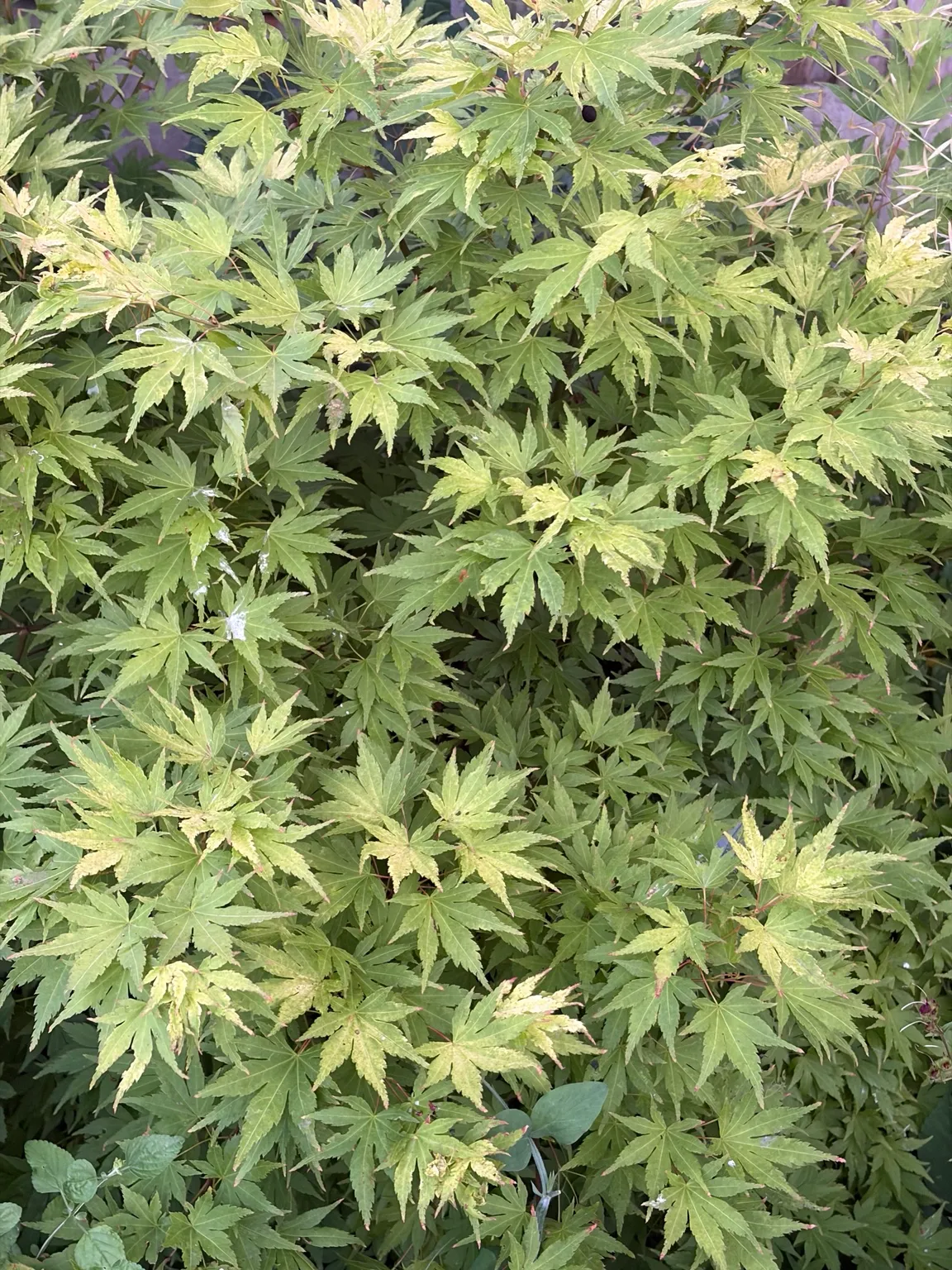
A dense mound of fine, deeply lobed green leaves that turn in autumn. Grown entirely for the foliage, and fussy about wind.
- Tree
- Grown for foliage
- Thirsty
- Type
- Tree
- Light
- Partial shade
- Water
- Thirsty
- Hardiness
- H6
- Where
- Border
Position and soil
- Sun
- Full sun
- Partial shade
- Aspect
- West-facing
- East-facing
- South-facing
- Exposure
- Sheltered
- Soil
- Chalk
- Clay
- Loam
- Sand
- Moisture
- Moist but well-drained
- Soil pH
- Acid
- Neutral
- Ultimate size
- 4-8 metres tall × 4-8 metres wide · 10-20 years to get there
- Habit
- Bushy
- Foliage
- Deciduous
- Family
- Sapindaceae
Sourced from the RHS. These are the RHS figures for the straight species; ours looks like a smaller cultivar, so the 4-8 metre height and spread very likely overstate it.
Care
- Watering
- Keep the root zone evenly moist and never sodden. Dry, windy spells matter as much as hot ones — check it after a week of wind, not just after a week of sun.
- Feeding
- A light slow-release feed in spring is all it needs. Mulch every spring, pulled back clear of the trunk rather than heaped against it.
- Pruning
- Barely any. Remove dead or crossing wood in late autumn or early winter when it is fully dormant, never in late winter or spring.
Winter — Mulch
Hardy here, so there is nothing to protect. Mulch in autumn or spring, keeping it off the trunk, and do any cutting now while the sap is not moving.
A low, layered mound of fine palmate leaves, fresh green through summer with the newest growth coming through paler at the tips. The flowers are tiny red things in spring that you will only notice if you go looking, and nobody grows one for them.
What it actually wants
Shelter, mostly. The classic failure is crisped brown leaf edges from about July onwards, and it gets blamed on sun when wind is at least as often the culprit — the leaves are thin and finely cut, they lose water faster than the roots can replace it, and a persistent drying breeze does the damage on a perfectly mild day. A spot with some shade from the hottest afternoon sun and a wall or a larger shrub taking the edge off the wind solves most of it.
Roots want moisture without waterlogging, which in practice means a mulch and a watering can rather than heavy soil that sits wet.
The genuinely useful thing to know is when not to cut it. Acers bleed sap copiously from wounds made in late winter and spring, so if pruning is needed at all, do it in late autumn or early winter when the tree is properly dormant. Cutting one in March is how you end up watching it drip for a fortnight.
Winter
Little to do. It is fully hardy and the bare branch structure is worth looking at. Mulch, keep it clear of the trunk, and take the opportunity to remove any dead wood while it is dormant.