Outdoors
Hollyhock
Alcea rosea
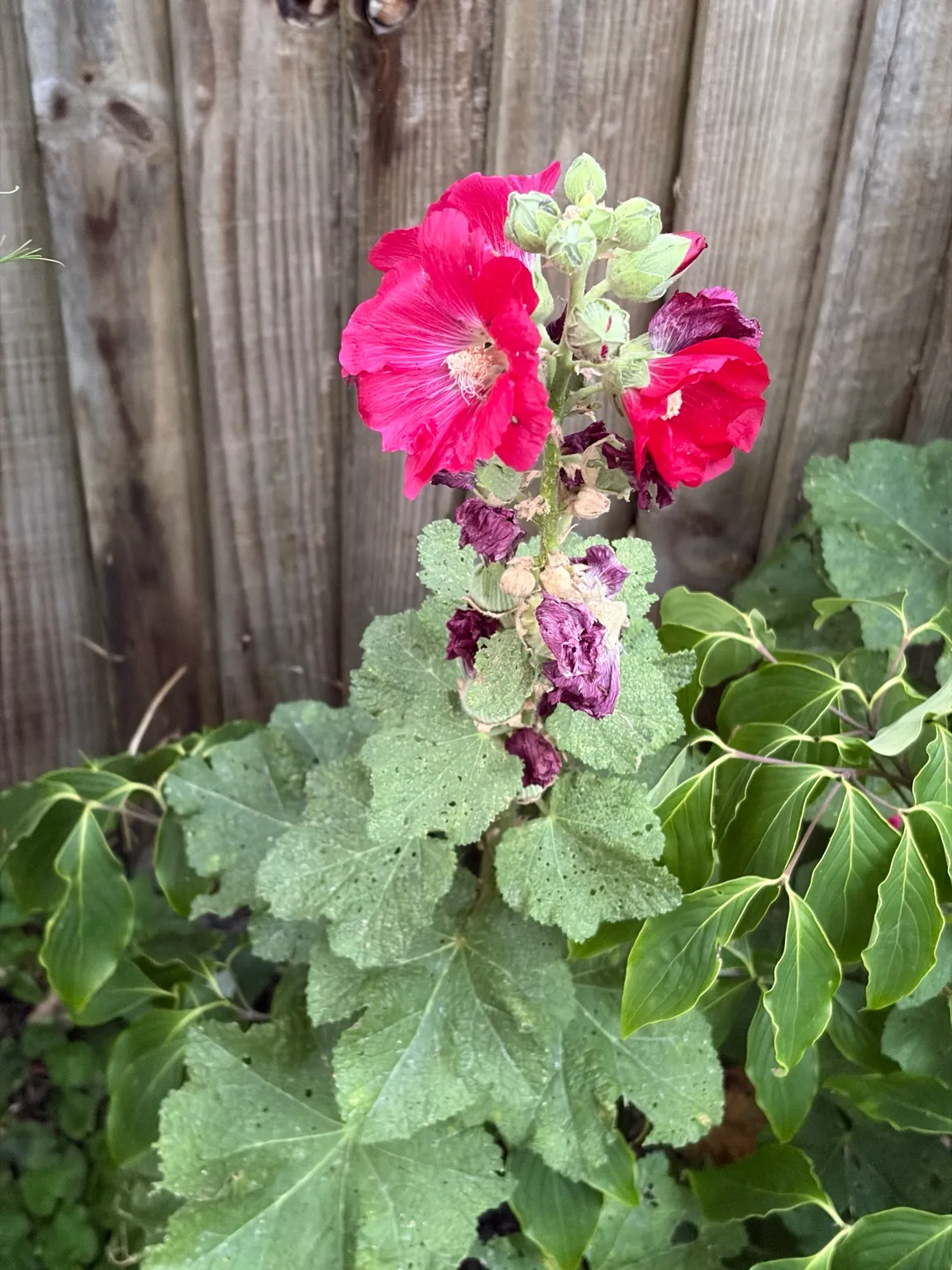
A tall spike of crimson-pink funnels against a fence, opening from the bottom up. Short-lived, rust-prone, and worth it anyway.
- In flower now
- Biennial
- Average
- Type
- Biennial
- Light
- Full sun
- Water
- Average
- Hardiness
- H5
- Where
- Border
- Flowers
- June–September
- Colour
- crimson, pink
Flowering year
Flowers June–September. It is currently August, so this plant is in flower.
Opens from the base of the spike upwards, so the bottom is over while the top is still in bud.
Outlined month is August, today.
Position and soil
- Sun
- Full sun
- Aspect
- South-facing
- West-facing
- Exposure
- Exposed
- Sheltered
- Soil
- Chalk
- Loam
- Sand
- Moisture
- Well-drained
- Soil pH
- Acid
- Alkaline
- Neutral
- Ultimate size
- 1.5-2.5 metres tall × 0.5-1 metres wide · 2-5 years to get there
- Habit
- Columnar upright
- Foliage
- Deciduous
- Family
- Malvaceae
Sourced from the RHS.
Care
- Watering
- Water at the base in dry weather, particularly while it is in flower. Keep the hose off the leaves — wet foliage is what rust wants.
- Feeding
- Mulch in spring, then a balanced feed or tomato feed while the buds are forming. Take the finished spikes off unless you want seedlings.
- Pruning
- Deadhead up the spike as the lower flowers go over. Cut the whole stem out once it reaches the top, or leave one to ripen seed.
Winter — Cut back
Cut the spent spikes down and clear every scrap of old leaf off the ground — bin it, do not compost it, because rust overwinters on dead foliage and on any leaf rosettes left behind. The plant itself will probably die after flowering, and that is normal for a biennial. Leave one seedhead to shed if you want it back next year.
A single stem that goes up rather than out, hung with wide crimson-pink funnels that open in sequence from the bottom of the spike to the top. The leaves are big, rounded, shallowly lobed and covered in rough hairs. It is the plant that turns up leaning against every cottage wall, and the leaning is genuine — anywhere windy, it wants a cane.
What it actually wants
Sun, drainage, and a realistic attitude to rust. Puccinia malvacearum gives you orange pustules on the undersides of the leaves and yellow spots on top, starting low and working up, and in the UK it is close to unavoidable. Nothing sprayed on it will cure it. What actually helps is hygiene: strip the worst lower leaves as they go, water the soil rather than the plant, and clear all the dead foliage away at the end of the season instead of letting it lie.
The other useful thing is to stop trying to keep individual plants alive. Hollyhocks are biennials — leaves one year, flowers the next, then usually death — and letting them self-seed into fresh plants each year keeps the rust cycle broken. Old clumps nursed along for years are the ones that end up skeletal by July.
Winter
Cut the spike down and clear the debris properly. Any seedling rosettes that appear nearby are next summer’s flowers, so leave those in place — but do not leave last year’s diseased leaves sitting on top of them.