Indoors
Heartleaf philodendron
Philodendron hederaceum 'Brasil'
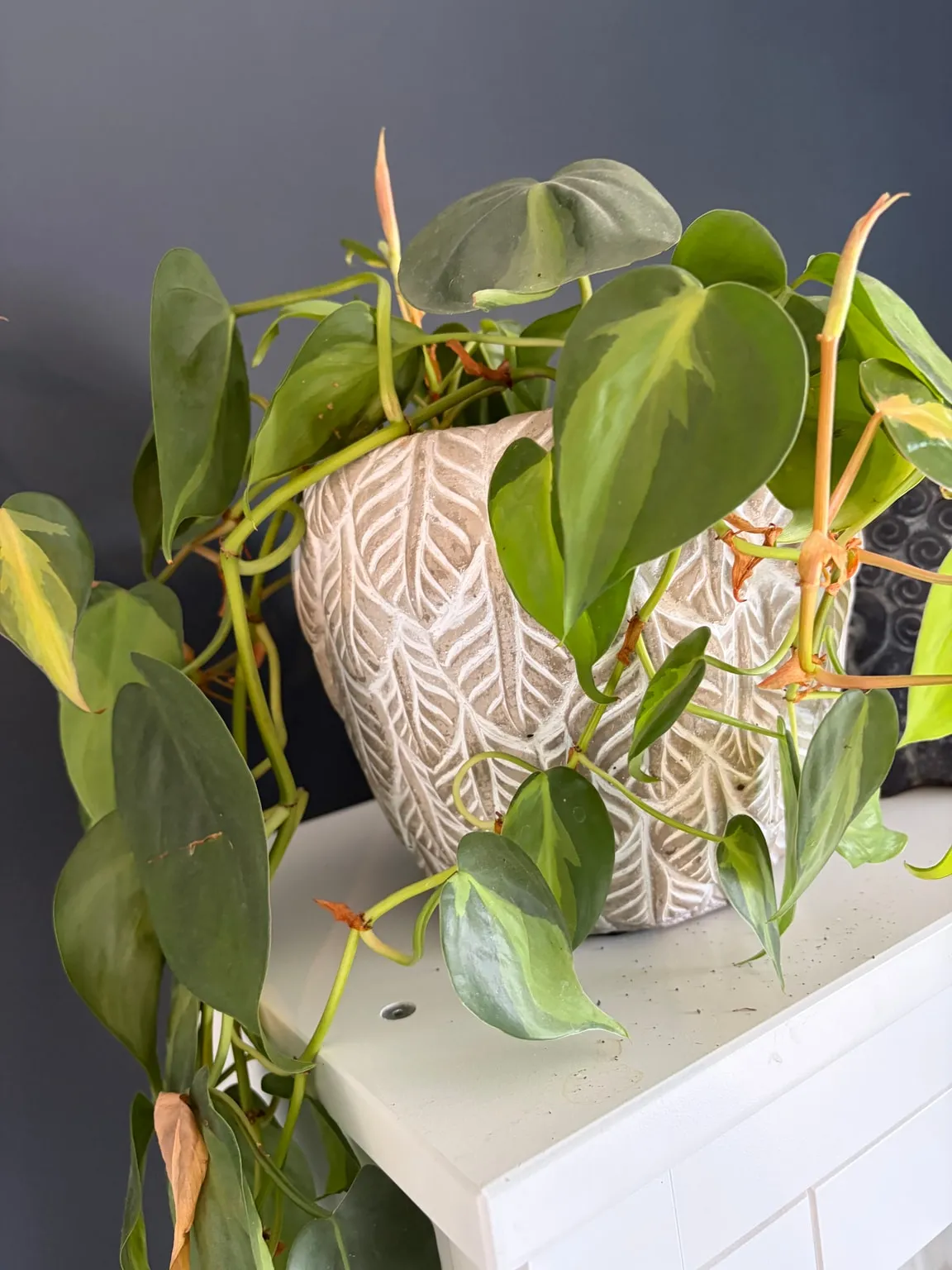
Long trailing stems of glossy heart-shaped leaves, some with a lime stripe down the middle and some reverted to plain green. The most forgiving thing in the house.
- Houseplant
- Grown for foliage
- Drought-tolerant
- Type
- Houseplant
- Light
- Bright, indirect light
- Water
- Drought-tolerant
- Where
- Shelf, trailing, out of direct sun
Care
- Watering
- Water when the top two or three centimetres are dry, then let it drain. It sulks visibly when thirsty — the stems go limp and the leaves lose their gloss — and picks up within hours of being watered, which makes it hard to underwater by accident and easy to overwater by habit.
- Feeding
- Balanced liquid houseplant feed monthly from spring to late summer. Nothing over winter.
- Pruning
- Cut any stem that has gone bare at the top back to within a few centimetres of the compost — it reshoots from there. The pieces you removed root in water in a fortnight and can go straight back into the same pot, which is the only way to make a thin plant look full again.
Winter — Water much less
Growth stops from about November and the watering should stop with it — every two or three weeks, and only when the compost is dry well below the surface. Keep it off cold windowsills and away from radiators. No feeding until March.
Pets and children
All parts contain calcium oxalate crystals, so a chewed leaf or stem will burn a cat, dog or child's mouth. Unpleasant rather than dangerous, but the trailing stems put it within easy reach of both.
Thin stems trailing a couple of feet off the shelf, hung with glossy heart-shaped leaves. Some carry a broad lime-green stripe down the centre, some are plain dark green — the same plant doing two different things, which is normal for this one and worth understanding rather than worrying about.
What it actually wants
The papery orange things clinging to the stems are cataphylls, not dead leaves. Every new leaf comes out wrapped in one, and once the leaf has unfurled the sheath dries, browns and hangs on for months. People pick them off assuming something has gone wrong. Nothing has; pull them away once they are properly crisp if they annoy you, and leave them if they don’t.
The plain green leaves are reversion, and reversion is a light problem. In a dim corner it stops paying the cost of the variegation and the new growth comes through solid green, which is more efficient and will slowly take over the whole plant. Move it somewhere brighter and cut the reverted lengths back to a node that still has the stripe, or accept a green philodendron, which is a perfectly good thing to have.
It also does not really want to trail. Left hanging it goes bare at the top and puts all its leaves at the far end. Cutting it back hard is not a punishment — it is how you get a full plant, and the offcuts root so readily in a glass of water that there is no reason to throw them away.
Winter
Nothing to do beyond leaving it alone and watering it much less. It is dormant rather than struggling from November onwards, so the leaves it drops in that period are ordinary attrition and not a signal to intervene. Keep it out of draughts and off cold glass, stop feeding, and start again when the light does.