Outdoors
Hardy geranium
Geranium
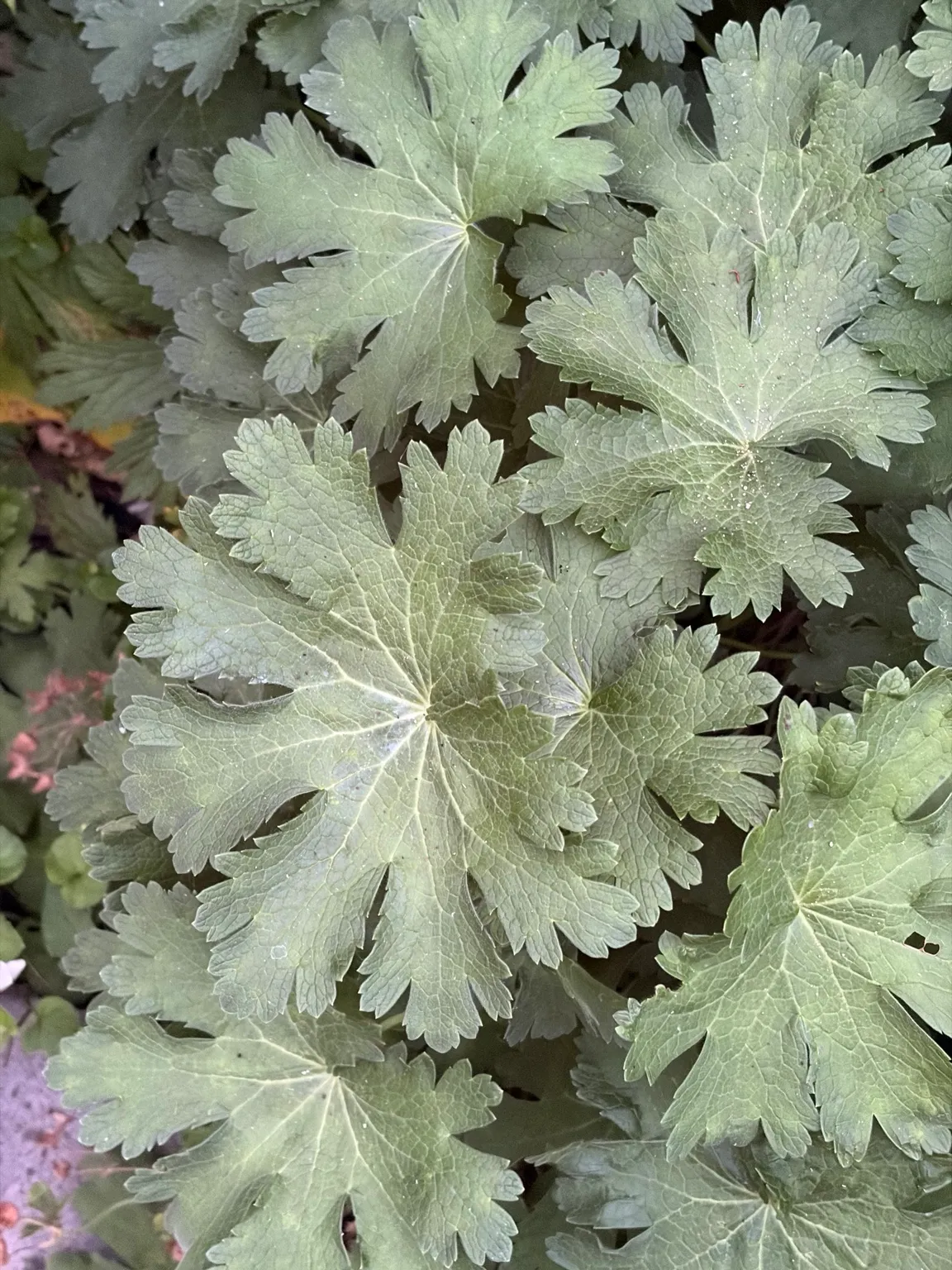
Cranesbill — a low dome of soft, deeply cut leaves that smothers bare soil and asks for almost nothing in return.
- Perennial
- Drought-tolerant
- Type
- Perennial
- Light
- Partial shade
- Water
- Drought-tolerant
- Hardiness
- H7
- Where
- Border
- Flowers
- May–July
- Colour
- pink, purple, blue
Flowering year
Flowers May–July. It is currently August, so this plant is not in flower.
Often gives a second, smaller flush later in summer if it is cut back hard.
Outlined month is August, today.
Position and soil
- Sun
- Full sun
- Partial shade
- Aspect
- West-facing
- East-facing
- South-facing
- Exposure
- Exposed
- Sheltered
- Soil
- Chalk
- Clay
- Loam
- Sand
- Moisture
- Moist but well-drained
- Well-drained
- Soil pH
- Acid
- Alkaline
- Neutral
- Ultimate size
- 0.5-1 metres tall × 0.5-1 metres wide · 2-5 years to get there
- Habit
- Bushy
- Foliage
- Deciduous
- Family
- Geraniaceae
Sourced from the RHS. Figures are from the RHS page for Geranium × magnificum, a representative large-leaved hardy geranium, because the genus page linked as rhsUrl carries no growing-conditions table.
Care
- Watering
- Water while it is settling in, and again in a long dry spell. An established clump handles most summers on its own.
- Feeding
- A mulch in spring is enough. In reasonable soil it wants no feeding at all — rich ground just buys you more leaf and fewer flowers.
- Pruning
- Shear the whole mound off near ground level once the foliage goes tired and yellow after flowering. Fresh leaves follow within a few weeks.
Winter — Cut back
Clear away the collapsed foliage once it has gone brown and slimy — slugs overwinter in it. The crown is fully hardy and needs nothing else.
Not the thing in the windowbox — those are pelargoniums, and they are tender. This is the cranesbill: a hardy herbaceous perennial that makes a spreading mound of soft, matt, palmately lobed leaves and holds thin-stemmed flowers just above it. The leaves here are large and grey-green, which points at one of the bigger-leaved sorts rather than a neat alpine type.
What it actually wants
Very little, which is the point. It will take sun or partial shade and most soils short of a bog, and it is one of the few things that genuinely suppresses weeds by simply covering the ground.
The failure mode is not death, it is mid-summer squalor. After flowering the mound flops open from the centre, the inner leaves yellow, and the whole thing looks moth-eaten by August. The fix feels brutal: take a pair of shears and cut everything back to a couple of inches. Within three weeks you get a complete fresh mound of clean foliage, and quite often a second round of flowers. Doing nothing is the only way to make it look bad.
Water it in during its first summer. After that, watering is optional and feeding is close to counterproductive.
Winter
Rake off the dead foliage once it collapses rather than leaving it as a slug hotel. Nothing needs covering, lifting or protecting — this is about as hardy as a border plant gets.