Outdoors
Double daylily
Hemerocallis
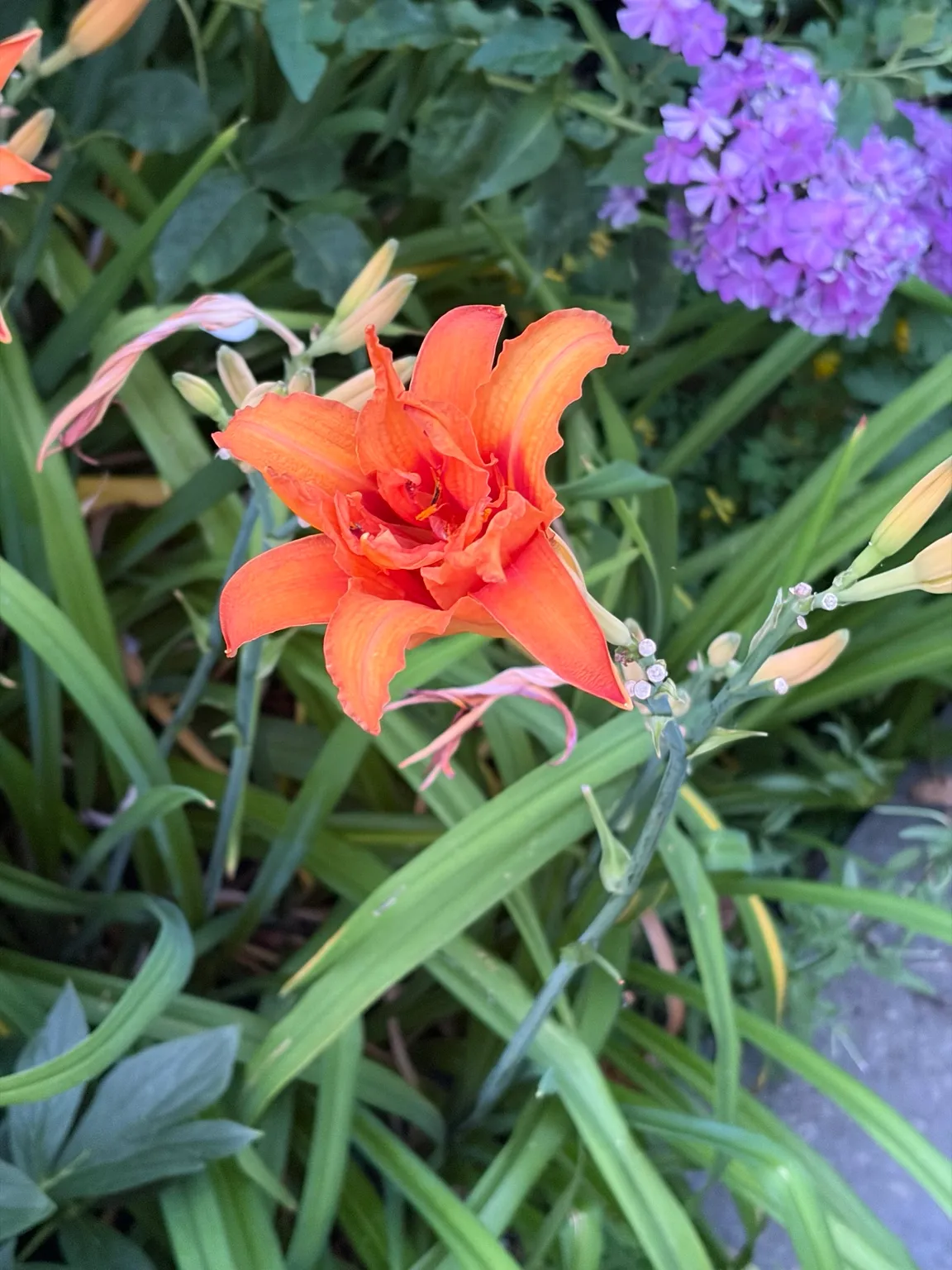
Orange, many-petalled trumpets over a fountain of strappy leaves. Each flower lasts precisely one day, which is the whole idea.
- In flower now
- Perennial
- Thirsty
- Type
- Perennial
- Light
- Full sun
- Water
- Thirsty
- Hardiness
- H7
- Where
- Border
- Flowers
- June–August
- Colour
- orange
Flowering year
Flowers June–August. It is currently August, so this plant is in flower.
One flower per bud per day, opening in succession over several weeks.
Outlined month is August, today.
Position and soil
- Sun
- Full sun
- Partial shade
- Aspect
- West-facing
- South-facing
- Exposure
- Sheltered
- Soil
- Chalk
- Clay
- Loam
- Sand
- Moisture
- Moist but well-drained
- Soil pH
- Acid
- Alkaline
- Neutral
- Ultimate size
- 0.5-1 metres tall × 0.1-0.5 metres wide · 2-5 years to get there
- Habit
- Clump forming
- Foliage
- Deciduous
- Family
- Asphodelaceae
Sourced from the RHS. Figures are for Hemerocallis fulva 'Flore Pleno', a double burnt-orange daylily; the RHS genus page carries no data table. The H7 hardiness rating comes from that cultivar's page too.
Care
- Watering
- Keep it watered through dry spells in spring and early summer, particularly while the buds are swelling. Drought at that stage is paid for later in dropped buds.
- Feeding
- Mulch in spring. Only add a balanced fertiliser if the soil is genuinely poor — otherwise you get a magnificent clump of foliage and not much else.
- Pruning
- Pull off each spent flower as it goes over, then cut the whole flower stem out at the base once its last bud has opened.
Winter — Cut back
Cut the yellowing foliage down to a hand's width above the crown once it flops in late autumn. Nothing to protect — it is reliably hardy here.
Hemerocallis means beautiful for a day, and it is not being poetic. Every flower opens in the morning and is finished by the following one. What makes the display work is the succession: each stem carries a stack of fat buds that open one or two at a time over weeks. This one is a double, so instead of six clean petals you get a ruffled orange rosette with extra petals crammed into the middle.
What it actually wants
Sun, and water in late spring. Bud blast — buds that yellow and drop without opening — is nearly always a drought that happened weeks before you noticed, while the flower stems were forming. That is the one time watering genuinely matters.
Doubles have a specific nuisance the single forms do not: a spent single flower shrivels to a neat spiral and drops off, whereas a spent double turns into a sodden brown rag that clings on and rots into the buds behind it. Five minutes of deadheading every couple of days keeps the clump looking intentional.
Clumps get congested after four or five years and flower less. Lift and split in early spring or autumn, discarding the woody middle.
Winter
It dies back completely. Cut the collapsed leaves off once they have gone yellow and leave the crown alone. No mulch, no fleece, no lifting.