Outdoors
Dahlia
Dahlia
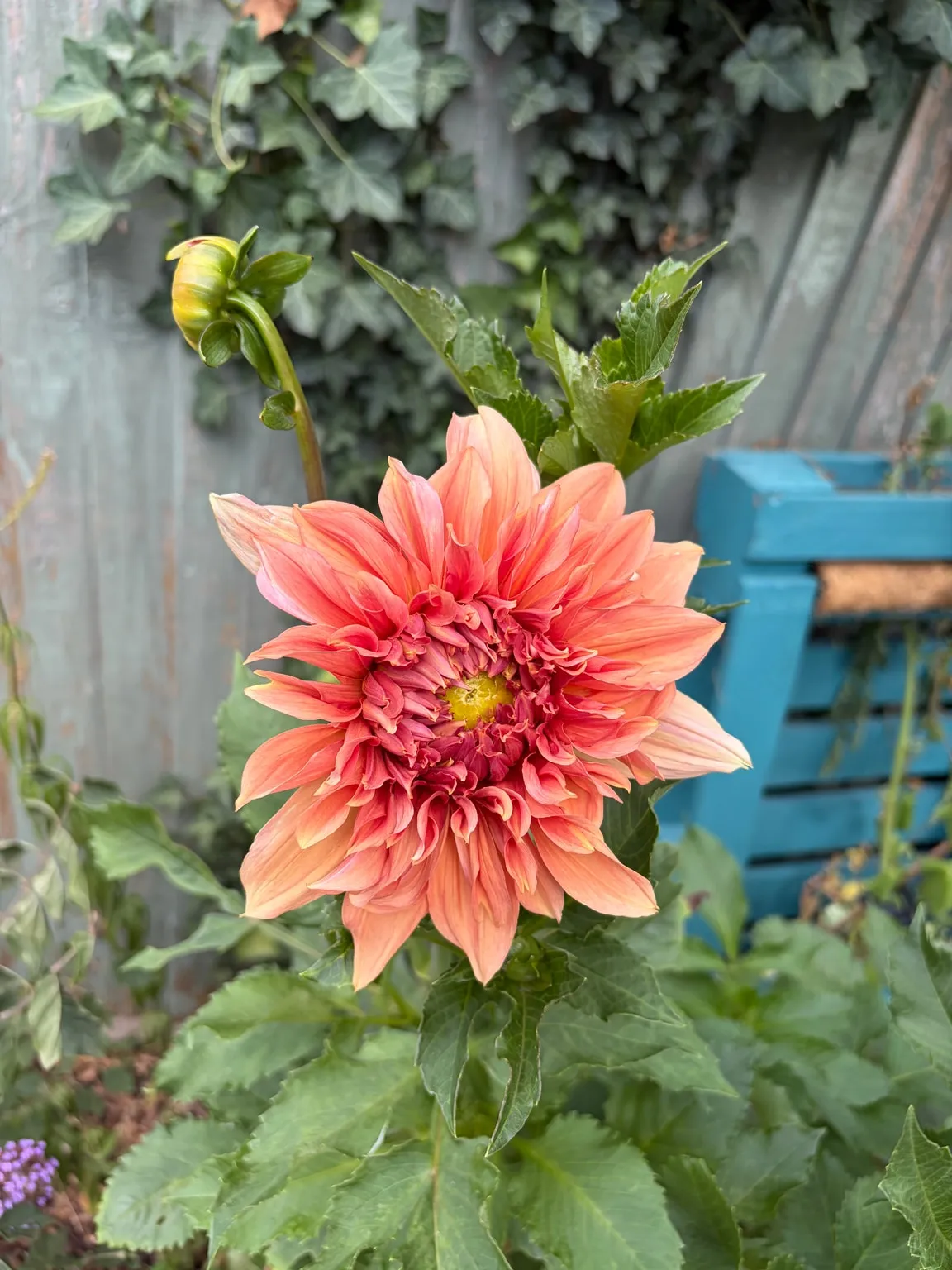
A decorative or waterlily-type dahlia in coral pink over a yellow centre, flowering from July until frost stops it. The one plant here with real winter homework.
- In flower now
- Tuber
- Thirsty
- Type
- Tuber
- Light
- Full sun
- Water
- Thirsty
- Hardiness
- H3
- Where
- Border
- Flowers
- July–October
- Colour
- pink, coral, yellow
Flowering year
Flowers July–October. It is currently August, so this plant is in flower.
Carries on until the first frost blackens the foliage.
Outlined month is August, today.
Position and soil
- Sun
- Full sun
- Aspect
- South-facing
- West-facing
- Exposure
- Sheltered
- Soil
- Clay
- Loam
- Sand
- Moisture
- Moist but well-drained
- Soil pH
- Acid
- Alkaline
- Neutral
- Ultimate size
- 1-1.5 metres tall × 0.5-1 metres wide · 1 year to get there
- Habit
- Clump forming
- Foliage
- Deciduous
- Family
- Asteraceae
Sourced from the RHS. Figures are for Dahlia 'Gerrie Hoek', a pink waterlily-type dahlia; the RHS genus page carries no data table.
Care
- Watering
- Deep watering in dry weather, particularly once it is in bud and flower. It is a soft, sappy plant putting out a lot of growth in a short season and it will not do that on a dry root.
- Feeding
- Compost mulch in spring, then a high-potash liquid feed — tomato feed is fine — every fortnight while it is flowering. Deadhead promptly and often.
- Pruning
- Not pruning so much as constant deadheading. Cut spent flowers back to a leaf joint rather than snapping the head off and leaving a bare stalk.
Winter — Lift and store
Wait for the first frost to blacken the foliage, then cut the stems to about 10cm and lift the clump carefully with a fork from well outside the crown. Wash off the soil, stand the tubers upside down for a fortnight somewhere dry so the hollow stems drain, then pack them in dry compost or vermiculite in a box in a frost-free shed or garage and check monthly for rot. In a sheltered, free-draining spot you can instead leave them in and cover the crown with 15cm of dry mulch — but be honest about the drainage, because a wet winter kills far more tubers than a cold one.
Tight, overlapping petals in coral pink opening around a yellow eye, on stems that keep coming from July until the weather ends it. Somewhere between a decorative and a waterlily type, though the classification only matters if you intend to show it.
What it actually wants
Sun, water, potash and attention. It flowers on new growth all season, so the more you take off the more it makes, and a plant left with a few seedheads on it will quietly decide the year is over.
The non-obvious part of deadheading is telling a spent flower from an unopened one, because at a glance they are the same size and both are shut. Buds are round and firm. Finished flowers are pointed and conical, with a slightly squashed feel. Get this wrong a few times and you will remove next week’s display while congratulating yourself on being tidy. Cut back to a leaf joint, not halfway up a bare stem.
Slugs go for the young shoots in spring and earwigs chew the petals later on, neither of which is fatal, both of which are annoying.
Winter
The one genuine job in this border. See the note above for the lifting and storing routine — the short version is that frost is the signal, not the enemy, and the tubers rot far more often than they freeze. If you leave them in the ground, keep them dry rather than warm.