Outdoors
Climbing rose
Rosa
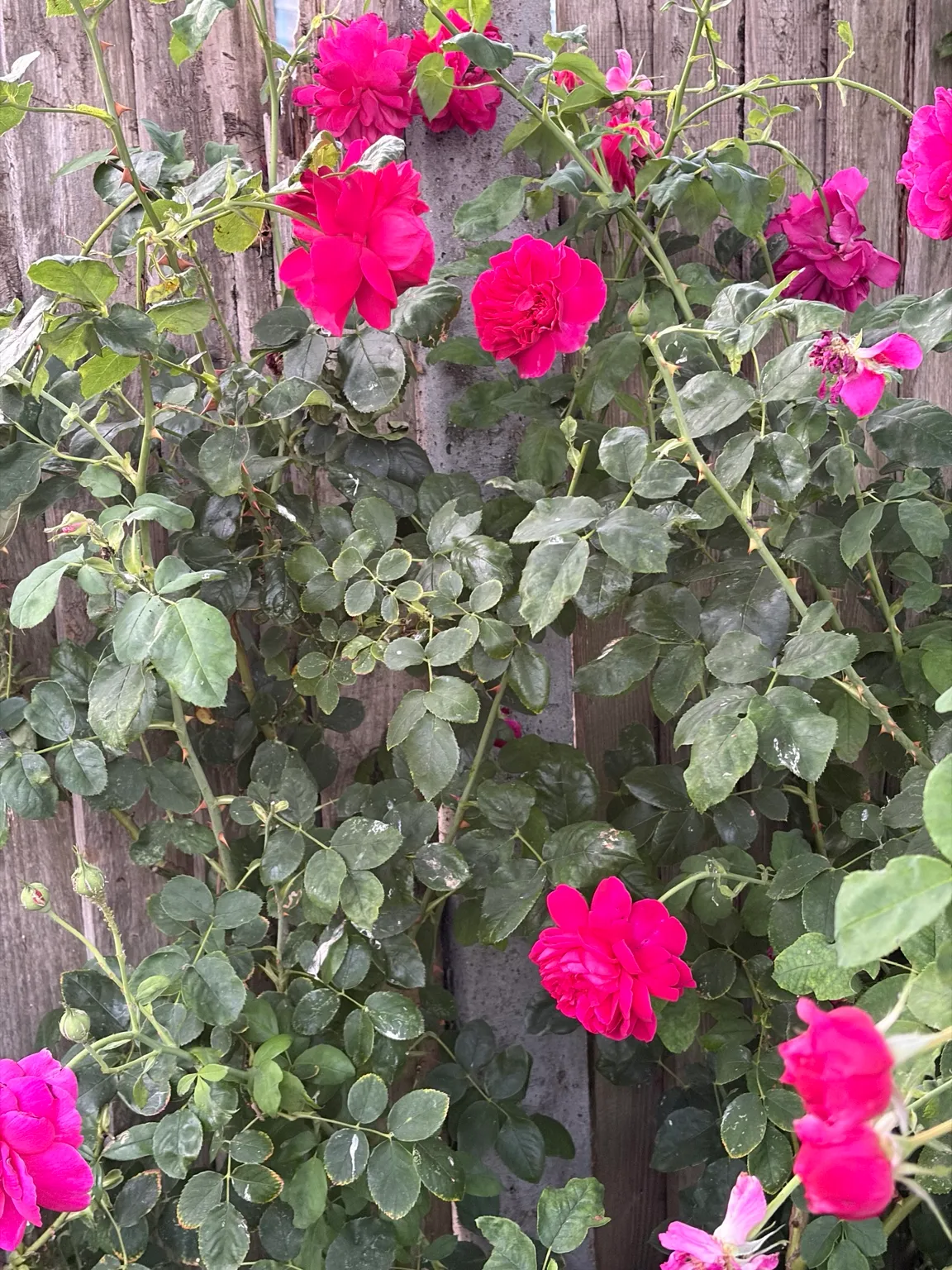
Deep pink double flowers on long arching stems against the fence, repeating in flushes from June until the weather turns.
- In flower now
- Climber
- Average
- Type
- Climber
- Light
- Full sun
- Water
- Average
- Hardiness
- H6
- Where
- Border
- Flowers
- June–October
- Colour
- pink, magenta
Flowering year
Flowers June–October. It is currently August, so this plant is in flower.
Comes in distinct flushes rather than continuously — a gap of a few weeks mid-season is normal, not a problem.
Outlined month is August, today.
Position and soil
- Sun
- Full sun
- Aspect
- South-facing
- North-facing
- West-facing
- East-facing
- Exposure
- Exposed
- Sheltered
- Soil
- Chalk
- Clay
- Loam
- Sand
- Moisture
- Moist but well-drained
- Well-drained
- Soil pH
- Acid
- Alkaline
- Neutral
- Ultimate size
- 2.5-4 metres tall × 1.5-2.5 metres wide · 5-10 years to get there
- Habit
- Climbing
- Foliage
- Deciduous
- Family
- Rosaceae
Sourced from the RHS. Figures are for a representative cerise-pink repeat-flowering climbing rose, Rosa 'Zéphirine Drouhin'; our cultivar is unidentified.
Care
- Watering
- A deep soak at the base every few days in dry weather rather than a daily splash. Keep the water off the leaves — wet foliage in warm still air is how mildew gets started, and a rose against a fence gets very little air moving through it.
- Feeding
- Mulch in spring with compost or well-rotted manure, and give a proper rose feed then. Feed again once the first flush is over to fuel the second.
- Pruning
- Prune the framework in late winter, shortening the side shoots that flowered back to two or three buds and leaving the main stems alone. Deadhead through summer to keep the flushes coming.
Winter — Nothing to do
Hardy here and needs no protection. The only winter job worth doing is walking round it after the first gales and re-tying anything that has worked loose — a long stem flailing about in wind will chafe itself raw against the fence.
Vivid pink, fully double, carried on long whippy stems that have grown up through the fence and out over the top of it. Whether this is a true climber or a tall shrub rose making a run for it is genuinely unclear, but it behaves like a climber and it gets treated like one.
What it actually wants
The thing that changes this plant more than feeding or watering is which way the stems point. A rose stem trained upright puts everything into the tip and flowers at the top where nobody can see it. Bend the same stem towards the horizontal and the sap has to travel sideways, which wakes up buds all along its length and gives you flowers from the bottom of the fence upwards. Wires run horizontally about 45cm apart, stems tied in along them with soft twine rather than wire, and a knot that leaves room for the stem to thicken.
Tie in the new long growths as they appear through summer, while they are still green and bendy. Left until winter they set rigid in whatever shape they happened to reach and will snap rather than bend.
Mildew shows up as a grey bloom on the young growth, usually on the driest, stillest part of the plant. Water the roots, not the leaves, and pull off the worst affected shoots.
Winter
Nothing to protect. Late winter is when the pruning happens: take out the dead and the crossing, shorten last year’s flowered side shoots hard, and keep the main framework stems. Check the ties while you are there.