Outdoors
Canna lily
Canna
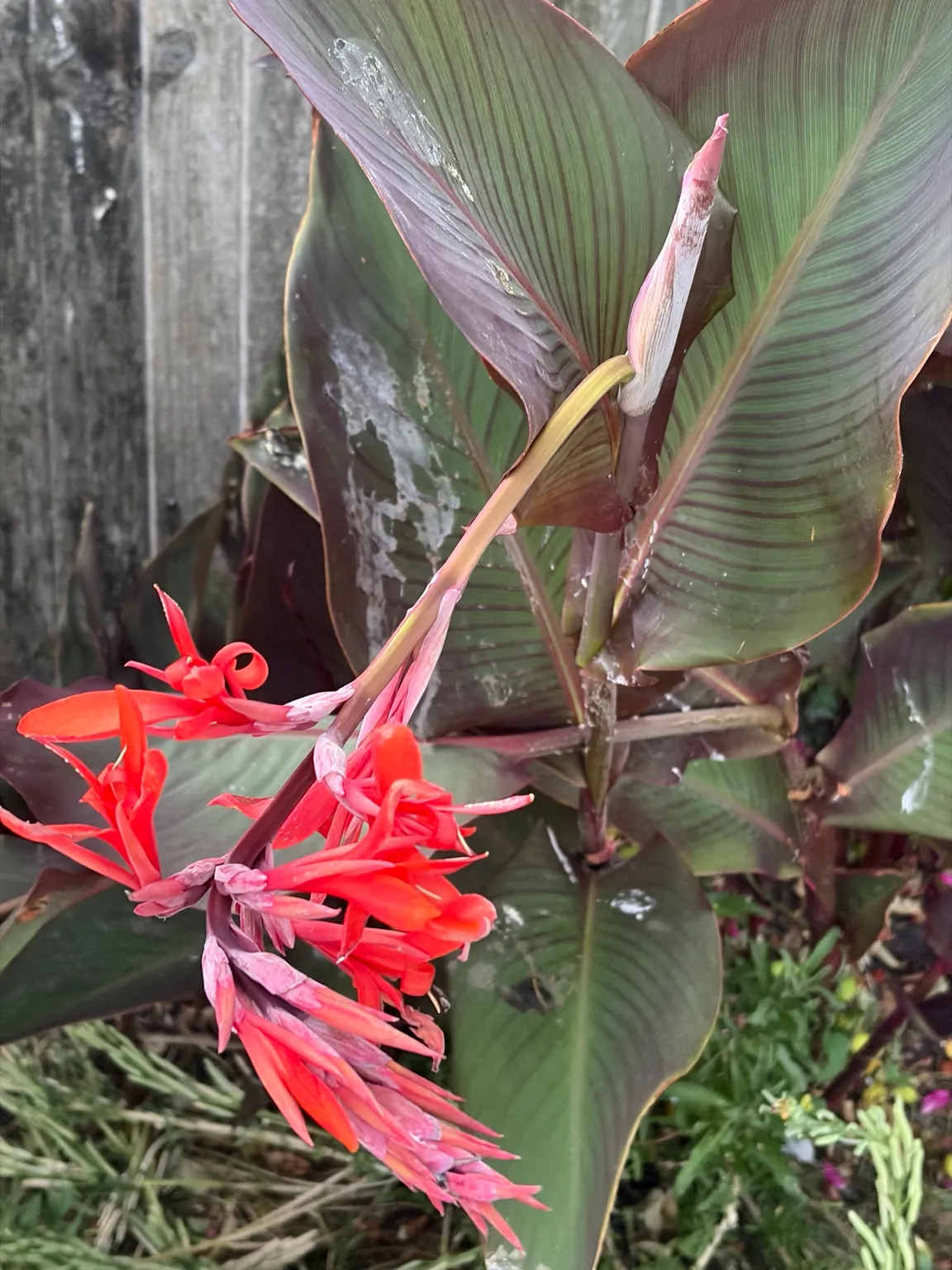
Bronze-purple paddle leaves with scarlet flowers on top. The most tropical thing in the border and the only one that needs rescuing before Christmas.
- In flower now
- Rhizome
- Grown for foliage
- Thirsty
- Type
- Rhizome
- Light
- Full sun
- Water
- Thirsty
- Hardiness
- H3
- Where
- Border
- Flowers
- July–October
- Colour
- red, orange
Flowering year
Flowers July–October. It is currently August, so this plant is in flower.
Keeps going into November in a mild autumn, then stops the night of the first proper frost.
Outlined month is August, today.
Position and soil
- Sun
- Full sun
- Aspect
- South-facing
- West-facing
- Exposure
- Sheltered
- Soil
- Loam
- Sand
- Moisture
- Moist but well-drained
- Soil pH
- Acid
- Alkaline
- Neutral
- Ultimate size
- 1.5-2.5 metres tall × 0.5-1 metres wide · 2-5 years to get there
- Habit
- Clump forming
- Foliage
- Deciduous
- Family
- Cannaceae
Sourced from the RHS. Figures are for Canna 'Australia', a dark bronze-leaved scarlet-flowered cultivar; the RHS genus page carries no data table.
Care
- Watering
- Never let it dry out while it is growing. Big leaves lose water fast, and in a hot spell it will want a soak every day or two — cannas are happy sitting in ground far wetter than most border plants tolerate.
- Feeding
- High-potash liquid feed every fortnight through the flowering season — tomato food is fine. Cut each spent flower stem right down to the base once the last bud on it has opened.
- Pruning
- No pruning as such. Snap off tatty lower leaves and remove finished stems at ground level to keep new shoots coming.
Winter — Lift and store
Wait for the first frost to blacken the foliage, then cut the stems down to about 15cm, lift the rhizomes, knock most of the soil off and let them dry for a day. Store them in barely-damp compost somewhere frost-free — a garage or shed is ideal, and they want checking a couple of times over winter for rot. The alternative is leaving them in with a 15cm mulch over the crown in a sheltered spot, which works in a mild dry winter and loses you the plant in a wet one.
The dark-leaved cannas are grown as much for the leaves as the flowers: broad bronze-purple paddles with a faint stripe, holding up spikes of scarlet flowers that look like something a bird of paradise dropped. It is the least English thing in the border and it knows it.
What it actually wants
Sun, food and water, in roughly that order, and a lot of all three. It is a marginal plant by nature and will grow in ground that would sulk anything else, so the failure mode is drought rather than wet: short stems, small leaves, half the flowers.
New leaves emerge as tight vertical rolls that unfurl like scrolls over a few days. Slugs work this out quickly and get inside them, so the leaf opens already lace-holed and there is nothing to be done about it afterwards. Worth checking the rolls rather than the open foliage if you are going out with a torch.
Flowering is stem by stem. Each stem carries a succession of buds and then stops for good, so cutting it out at the base once it is spent pushes energy into the next shoot instead of into seed pods.
Winter
This is the one that actually needs you. Everything else in this border can be ignored until spring; the canna cannot. Frost blackens the top growth overnight, which is your signal — cut down, lift, store dry and frost-free. Leaving it in the ground under a thick mulch is a gamble, and in a wet winter the rhizomes rot rather than freeze.