Outdoors
Border phlox
Phlox paniculata
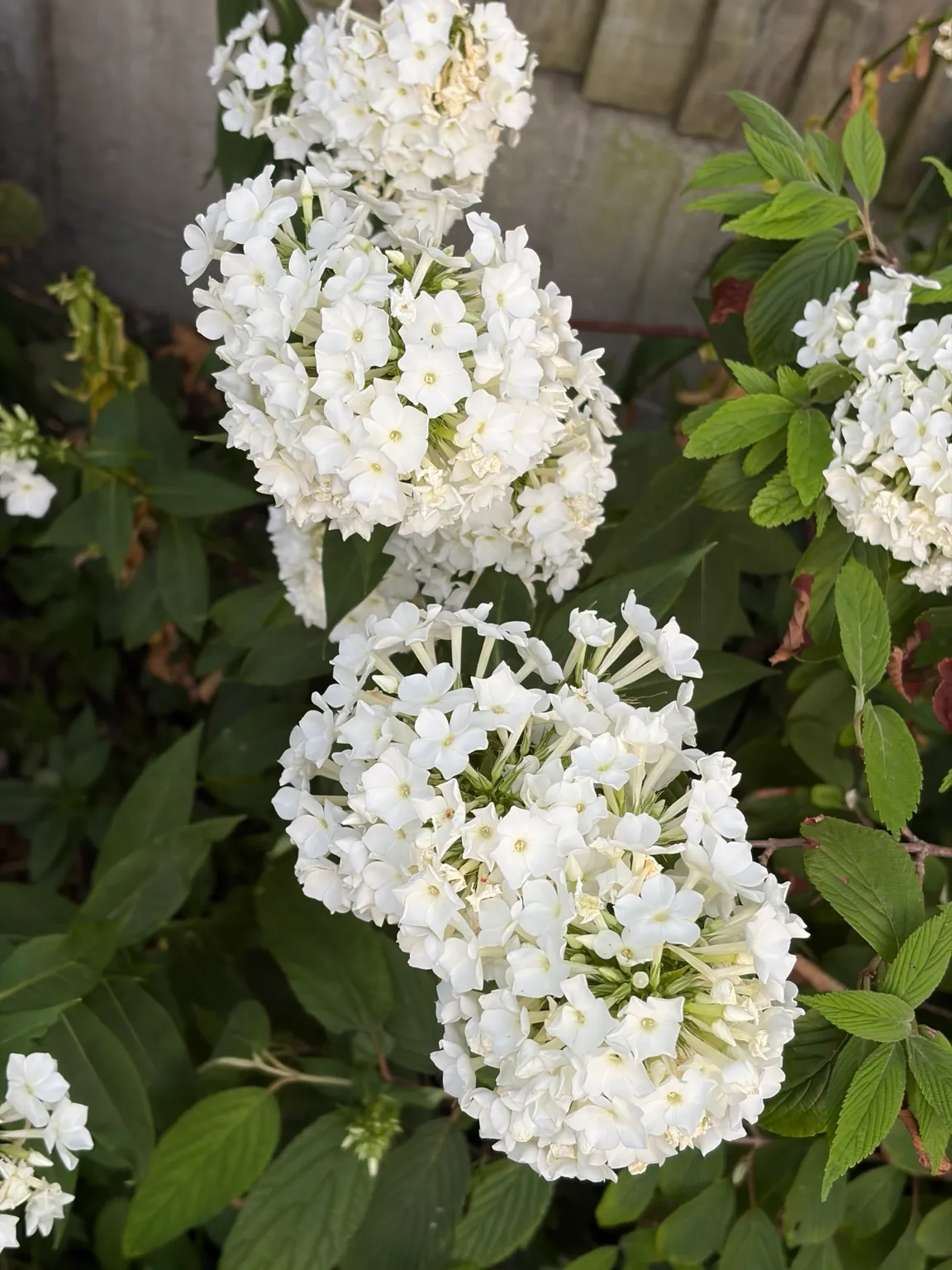
Domed heads of flat white flowers on tall upright stems, at their best in the evening when the scent arrives.
- In flower now
- Perennial
- Thirsty
- Type
- Perennial
- Light
- Full sun
- Water
- Thirsty
- Hardiness
- H7
- Where
- Border
- Flowers
- July–September
- Colour
- white
Flowering year
Flowers July–September. It is currently August, so this plant is in flower.
Deadheading the main head brings on smaller side shoots well into September.
Outlined month is August, today.
Position and soil
- Sun
- Full sun
- Partial shade
- Aspect
- South-facing
- West-facing
- East-facing
- Exposure
- Exposed
- Sheltered
- Soil
- Chalk
- Clay
- Loam
- Sand
- Moisture
- Moist but well-drained
- Soil pH
- Acid
- Alkaline
- Neutral
- Ultimate size
- 1-1.5 metres tall × 0.5-1 metres wide · 2-5 years to get there
- Habit
- Clump forming
- Foliage
- Deciduous
- Family
- Polemoniaceae
Sourced from the RHS.
Care
- Watering
- Wants fertile ground that never dries out properly. In drought, water generously at the base rather than over the top of it.
- Feeding
- A spring mulch of compost or well-rotted manure, laid on thickly. It is a hungry plant and the mulch does double duty holding moisture in.
- Pruning
- Deadhead the faded heads to keep the side shoots coming, then cut the whole clump to the ground in late autumn.
Winter — Cut back
Cut the stems right down in late autumn and take the debris away rather than leaving it on the soil — it carries eelworm and mildew through to next year. No protection needed.
Stiff upright stems topped with a dome of small, flat, five-petalled flowers, packed tightly enough to read as one solid head from a distance. White is the version that earns its place: it glows at dusk, and the scent — sweet, slightly peppery — turns up in the evening rather than at midday.
What it actually wants
Damp, fed soil and moving air. Powdery mildew is the standard complaint, and the standard misunderstanding: it is a symptom of dry roots and stagnant air, not of wet weather. Phlox in a dry, sheltered corner will mildew every August however carefully you water the leaves; phlox in decent moist ground rarely bothers.
Two things help more than any spray. Mulch thickly in spring so the roots never bake, and in April thin each clump down to five or six of the strongest stems, pulling the rest out at the base. Fewer stems means air between them, and the flower heads come noticeably bigger.
The other pest to know about is phlox stem eelworm, which shows as narrowed, thread-like distorted leaves on stunted shoots. There is no treatment. Dig the plant out and do not replant phlox in that spot.
Winter
Cut everything to ground level once it has gone over and bin the top growth rather than composting it. The roots are entirely hardy.