Outdoors
Bear's breeches
Acanthus mollis
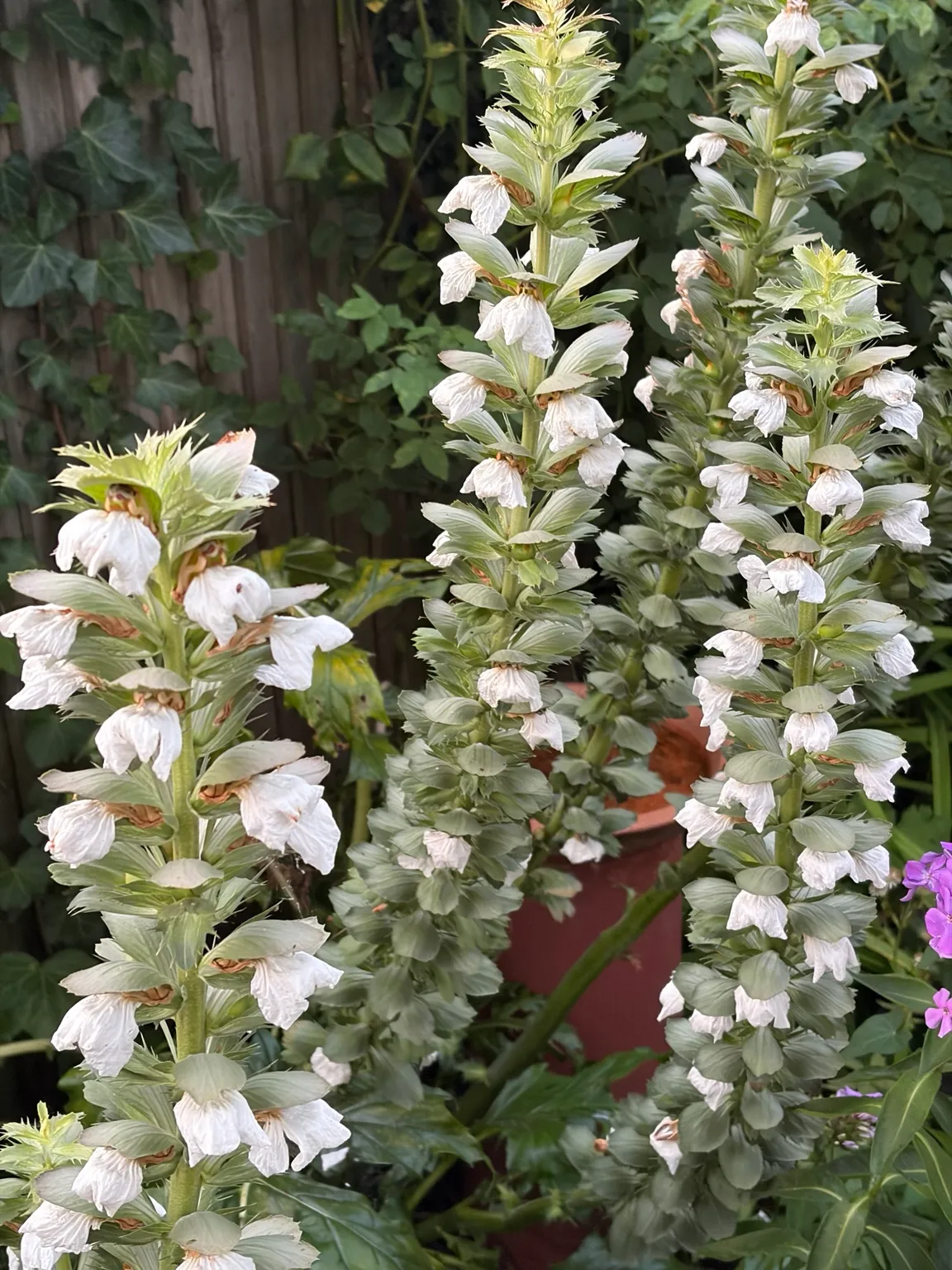
Huge glossy lobed leaves and metre-high spikes of hooded white flowers. Architectural, drought-proof, and permanent whether you like it or not.
- In flower now
- Perennial
- Grown for foliage
- Drought-tolerant
- Type
- Perennial
- Light
- Partial shade
- Water
- Drought-tolerant
- Hardiness
- H6
- Where
- Border
- Flowers
- June–August
- Colour
- white, green, purple
Flowering year
Flowers June–August. It is currently August, so this plant is in flower.
Spikes often hold on into early autumn and dry standing on the plant.
Outlined month is August, today.
Position and soil
- Sun
- Full shade
- Full sun
- Partial shade
- Aspect
- South-facing
- North-facing
- West-facing
- East-facing
- Exposure
- Exposed
- Sheltered
- Soil
- Chalk
- Loam
- Sand
- Moisture
- Well-drained
- Soil pH
- Acid
- Alkaline
- Neutral
- Ultimate size
- 1-1.5 metres tall × 1-1.5 metres wide · 2-5 years to get there
- Habit
- Columnar upright
- Foliage
- Deciduous
- Family
- Acanthaceae
Sourced from the RHS.
Care
- Watering
- Water through its first year while the roots go down. After that, only in a notably long dry spell — it copes with drought better than most things in the border.
- Feeding
- A light compost mulch in spring and nothing else. Overfeeding gives soft, floppy leaves. Do not attempt to move it.
- Pruning
- Cut the spent spikes out at the base, or leave them standing if you want the dried skeletons. Pull off leaves as they go tatty.
Winter — Cut back
Cut the collapsed leaves and any remaining spikes back in late autumn or early winter — the dead foliage turns to slime and hides slugs. It needs no protection at all. New leaves usually push through in February, earlier than you expect.
Grown as much for the leaves as the flowers: big, glossy, deeply lobed things that arch out into a mound a metre across. The flower spikes come up straight through the middle, stacked with hooded white flowers under green-purple bracts that are stiff and faintly spiny. It is the leaf that got carved onto the top of every Corinthian column, which tells you the shape has been admired for a while.
What it actually wants
Almost nothing, and a decision made carefully the first time. The roots are thick, brittle and go down well over a metre, and every fragment left behind will make a new plant. That makes it effectively impossible to move or remove once it is established — digging it out is how most people end up with three of them. The RHS puts this politely as “avoid moving”. Plant it where it can stay.
It takes shade, sun, poor soil and drought without complaint, though it flowers more freely with a few hours of sun. In deep shade you get magnificent foliage and few spikes, which is a reasonable trade.
Slugs and snails will shred the new spring leaves if they get the chance, and powdery mildew can turn late-summer foliage grey. Both are cosmetic.
Winter
Cut it back once the leaves go over. Standing spikes dry to a good grey-brown skeleton if you want the winter structure, so leave a few. Nothing needs wrapping, mulching or lifting — this is hardy well below anything a UK winter manages.